Two little pigs and the mountain
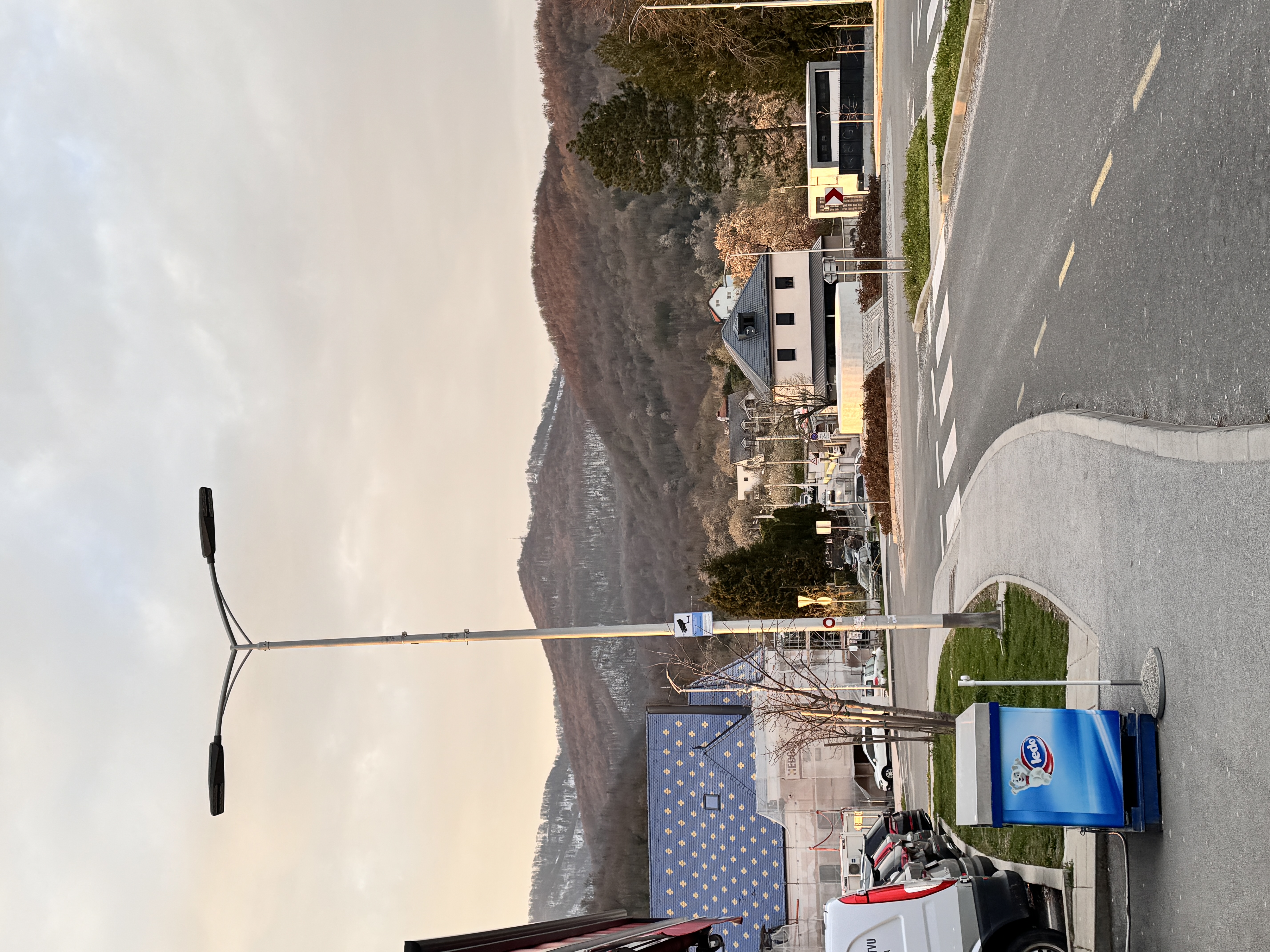
In March of 2026, my friend—who also happens to be named Isaac—and I set off for a weekend in Zagreb. We arrived Friday afternoon, dropped off our bags, and spent a relaxed evening walking around the Stari grad (old city). The real adventure was slated for Saturday. A friend from Croatia had suggested a route up the nearby mountain, Sljeme, reassuring us it would be a straightforward three-hour hike to the summit. The logistics were foolproof: we would take the tram to the base of the mountain, follow the trails to the top, and ride the cable car back down.
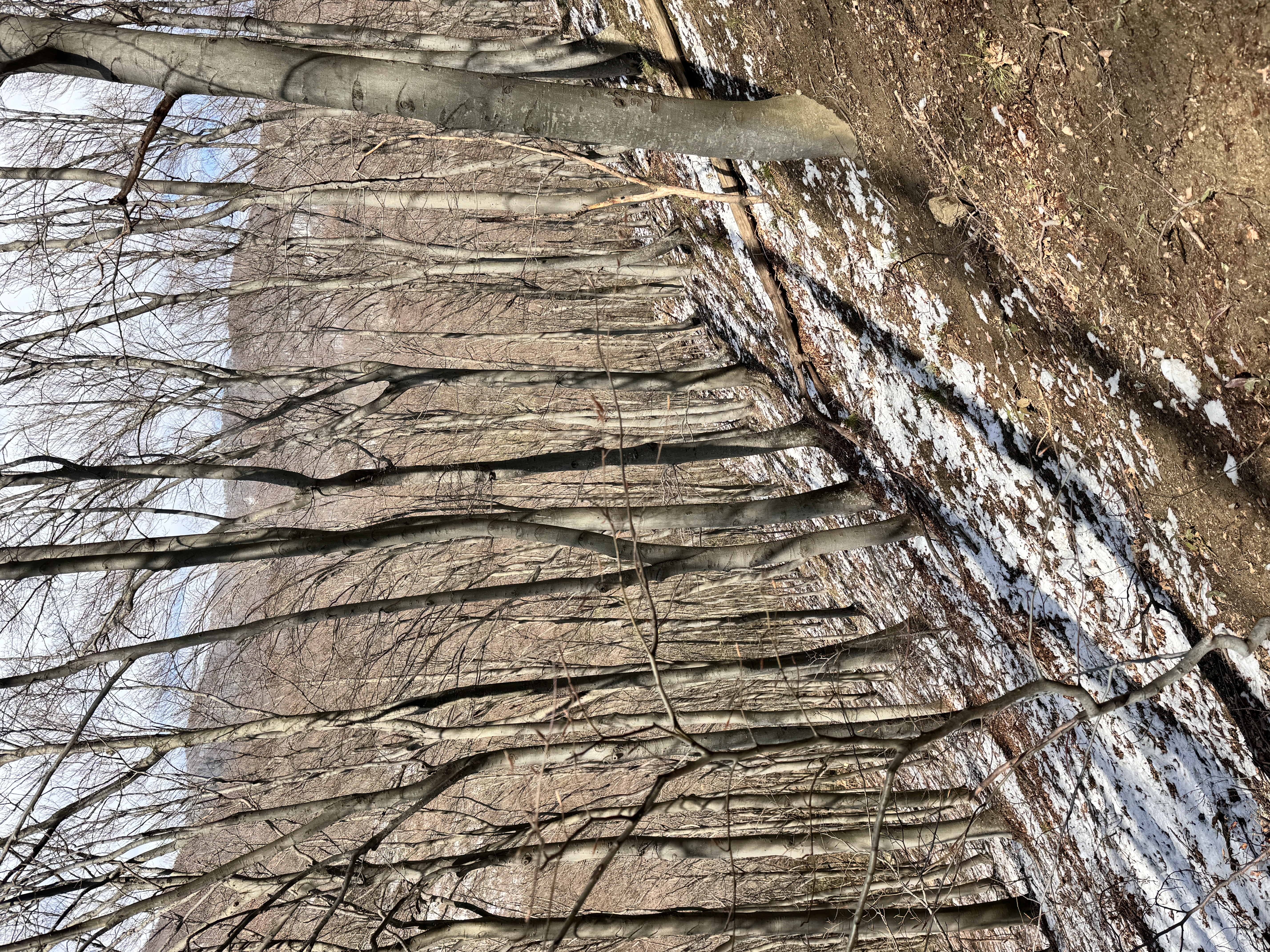
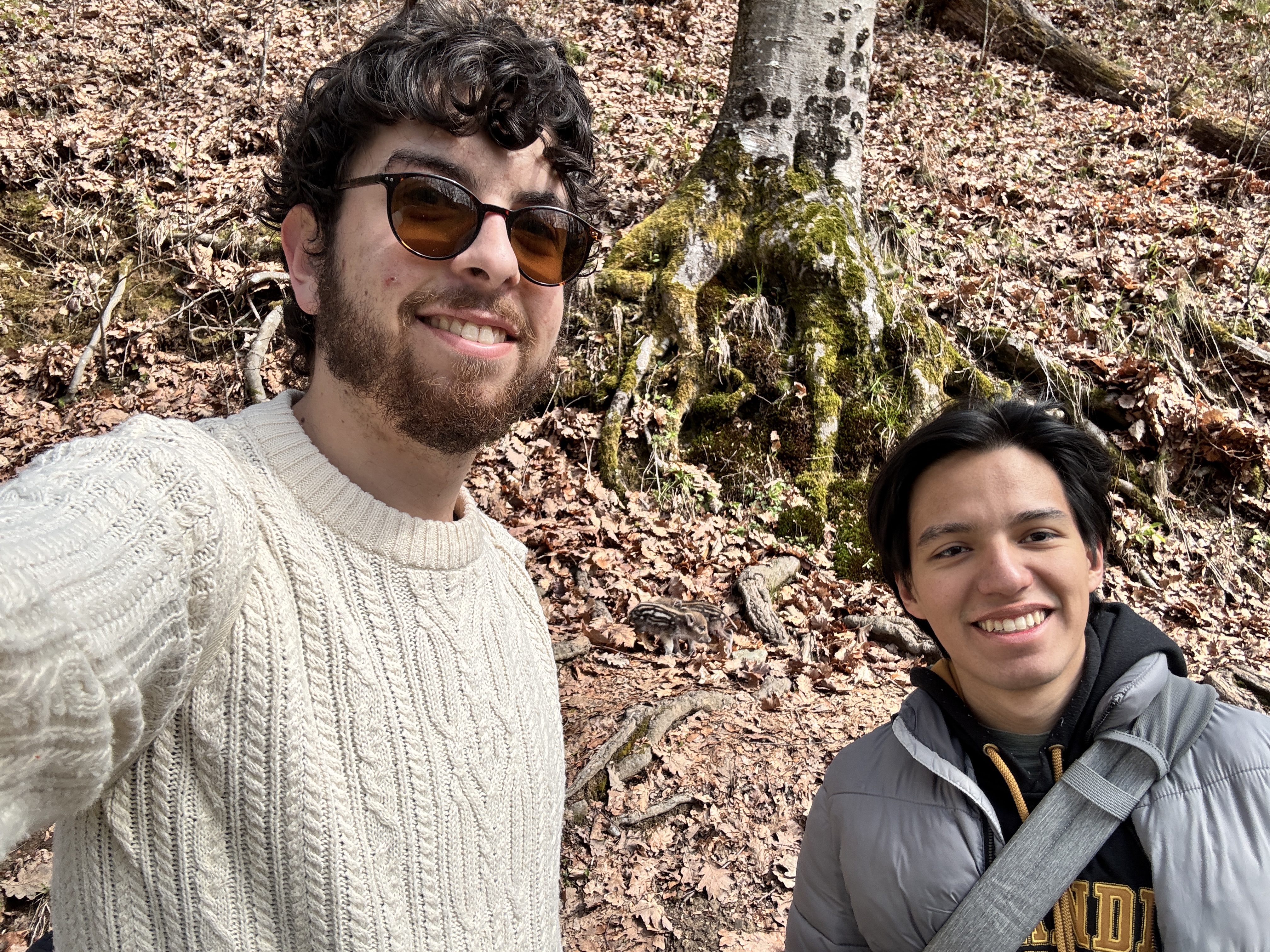
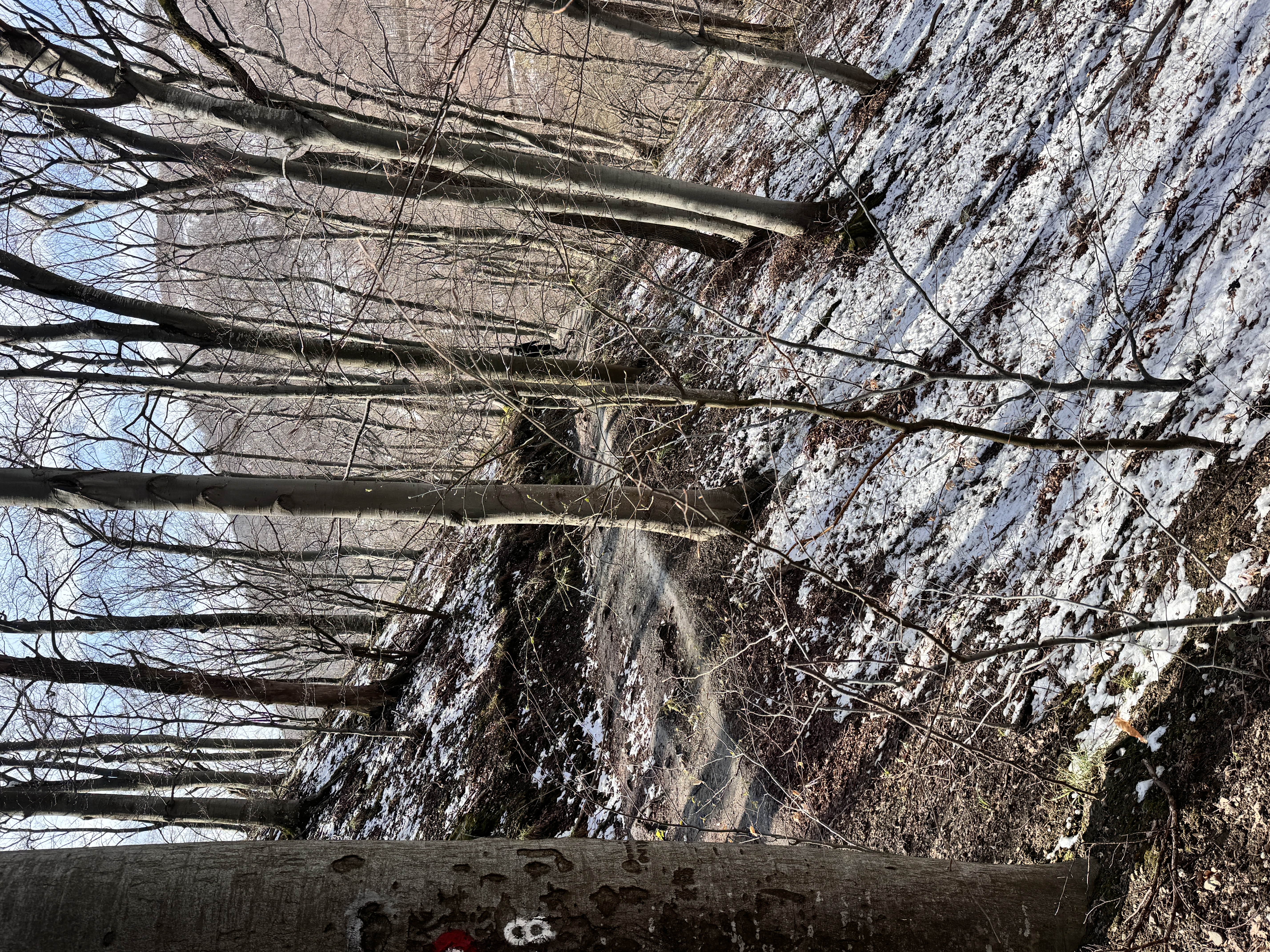
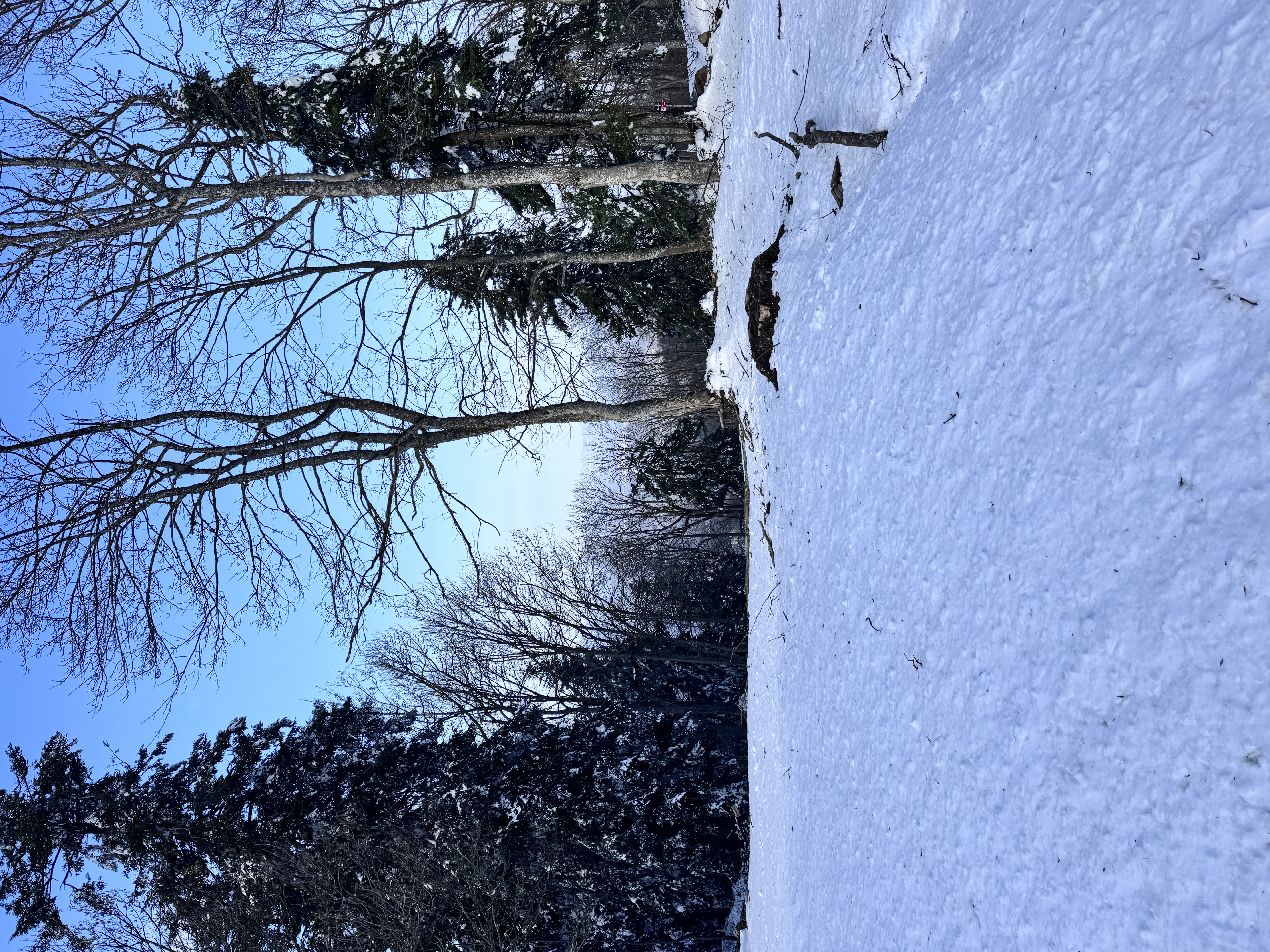
The hike started through the forest. The trees were bare, their dry leaves masking a muddy trail. We quickly spotted a couple ahead of us, in their forties, decked out in full hiking regalia: waterproof boots, hats, and walking sticks. On our right we heard rustling in the leaves. I tilted my head and squinted my eyes, like a dog trying to read a menu. It took us a minute to figure out what we were looking at. They were too small to be puppies. Perhaps a capybara? They had brown fur and were no longer than a foot in length. Then we realized: baby wild boars. The two of them chased each other around, albeit at quite a leisurely pace. The rustling leaves were accompanied by the occasional whimper.
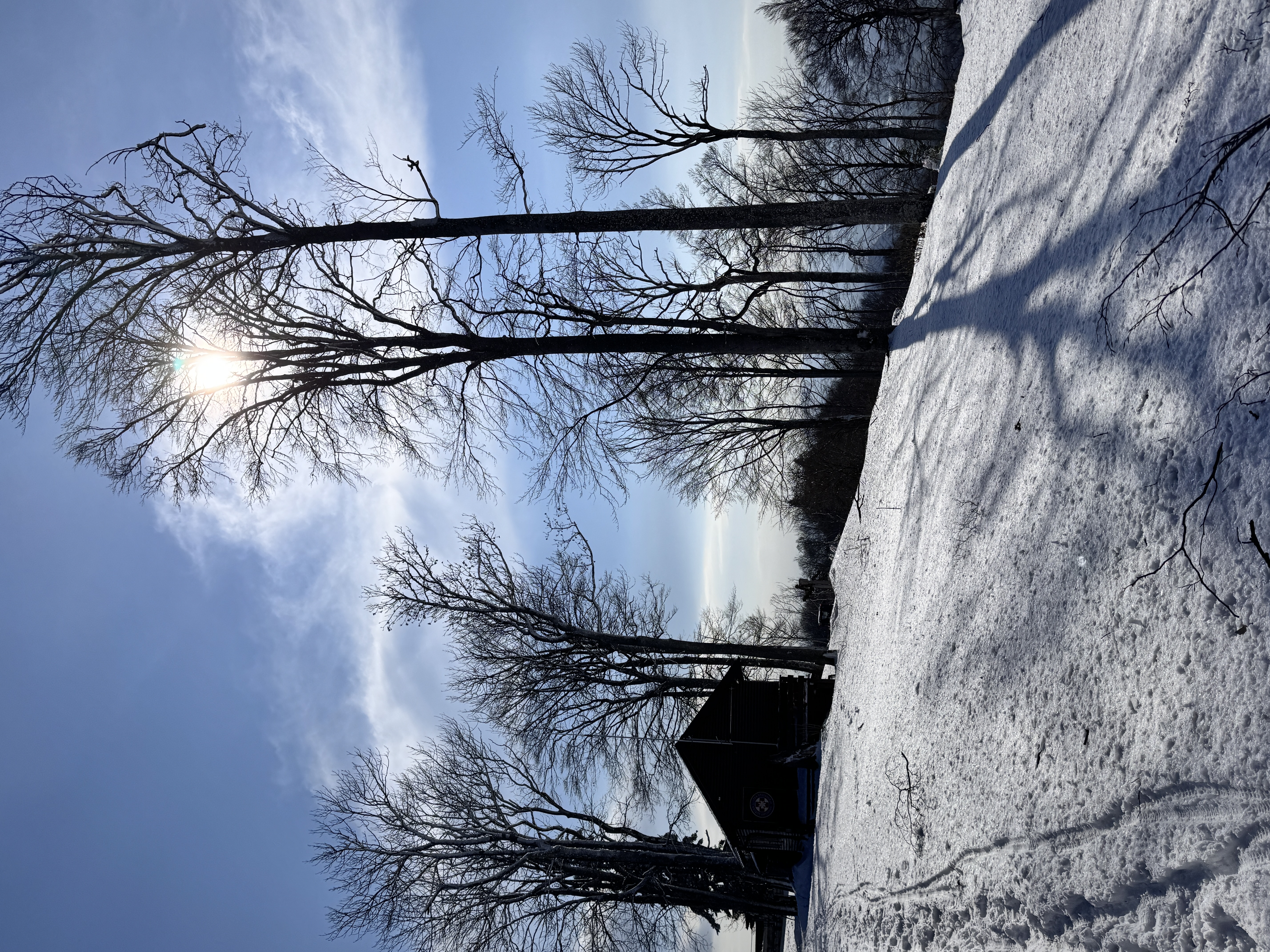
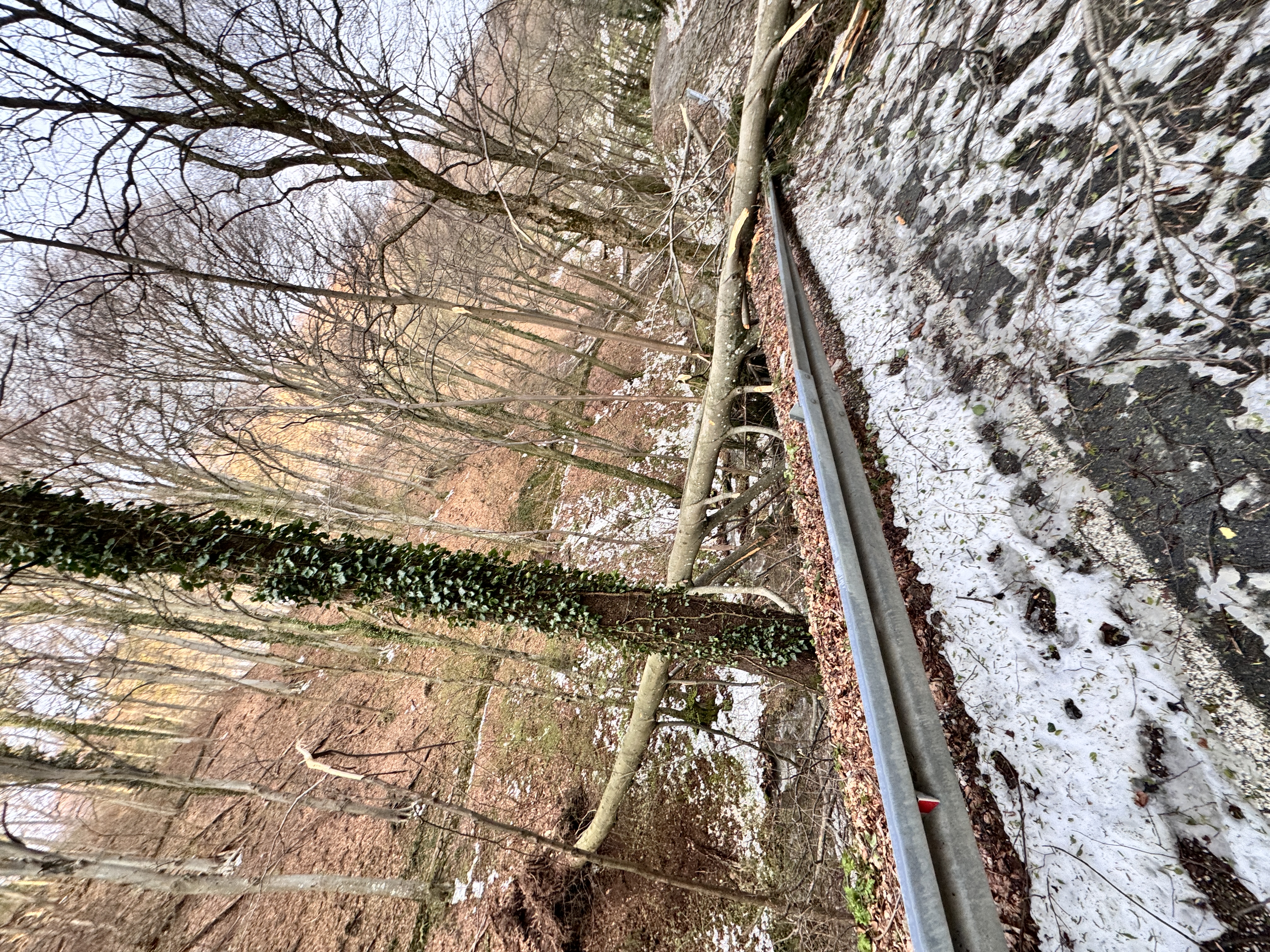
As we continued upward, we occasionally passed massive fallen trees sprawled across the hills. A storm tore through Zagreb the day before, knocking them down, but I didn’t think much of it. An hour into the hike, snow began to speckle the mountainside above us. Growing up in Canada, snow was a regular sight for me. Every few years we would have strong snow storms that knocked over trees. Sometimes they would fall on power lines, causing temporary blackouts. I became desensitized to that sort of stuff, but for Isaac it was only the second time in his life seeing snow.
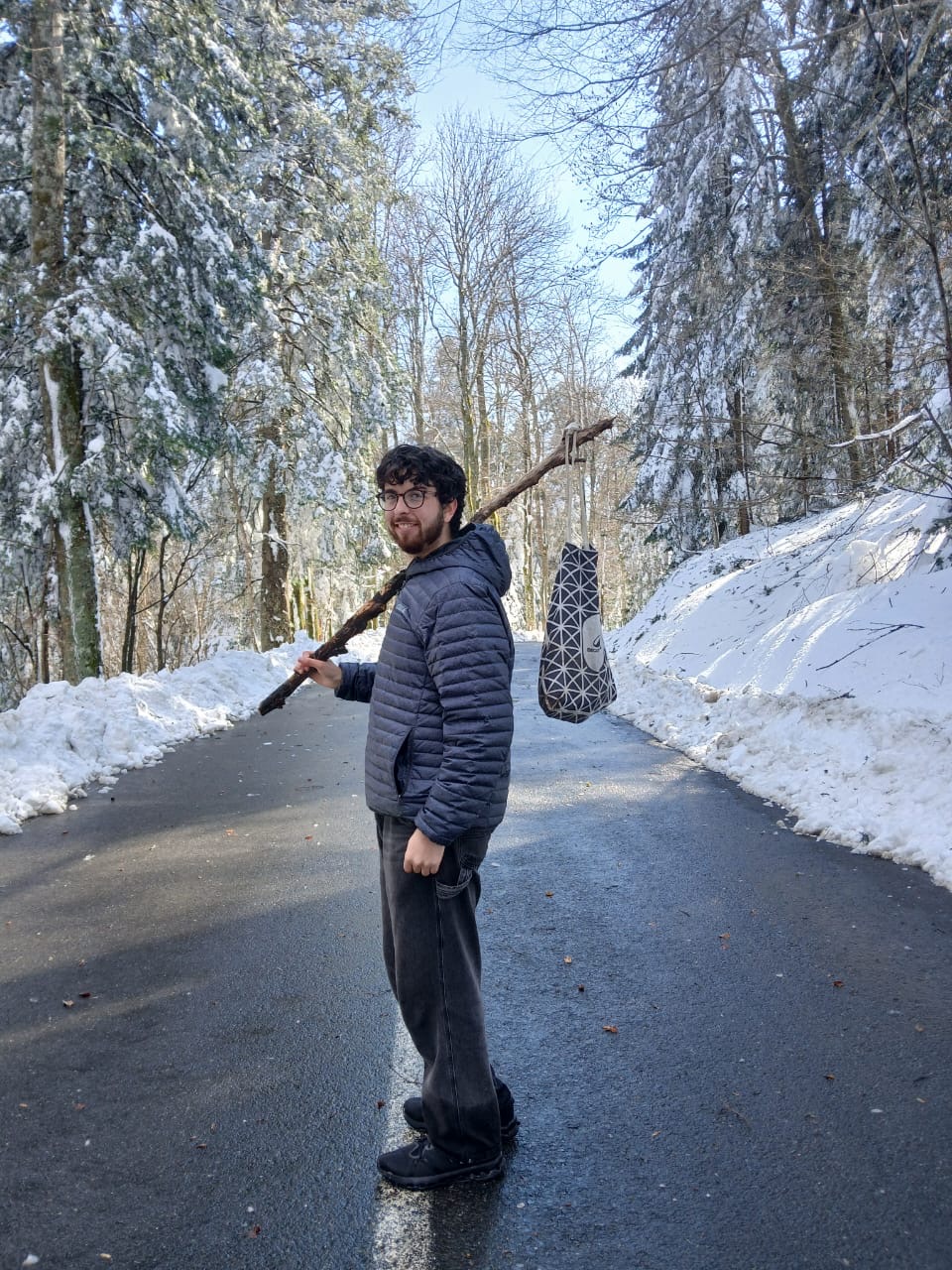
Isaac grew up in Mexico, just outside of Mexico City. We both attended the same masters program in astrophysics. It was an Erasmus exchange program, where we spent each semester at a different university. We had met six months prior in Rome for our first semester. We then both moved to Belgrade for our second term. This is what eventually led us to this weekend trip in Zagreb, a five hour bus ride away.
As we climbed we passed more fully geared hikers. “Bok,” they would say, Croatian for hello.
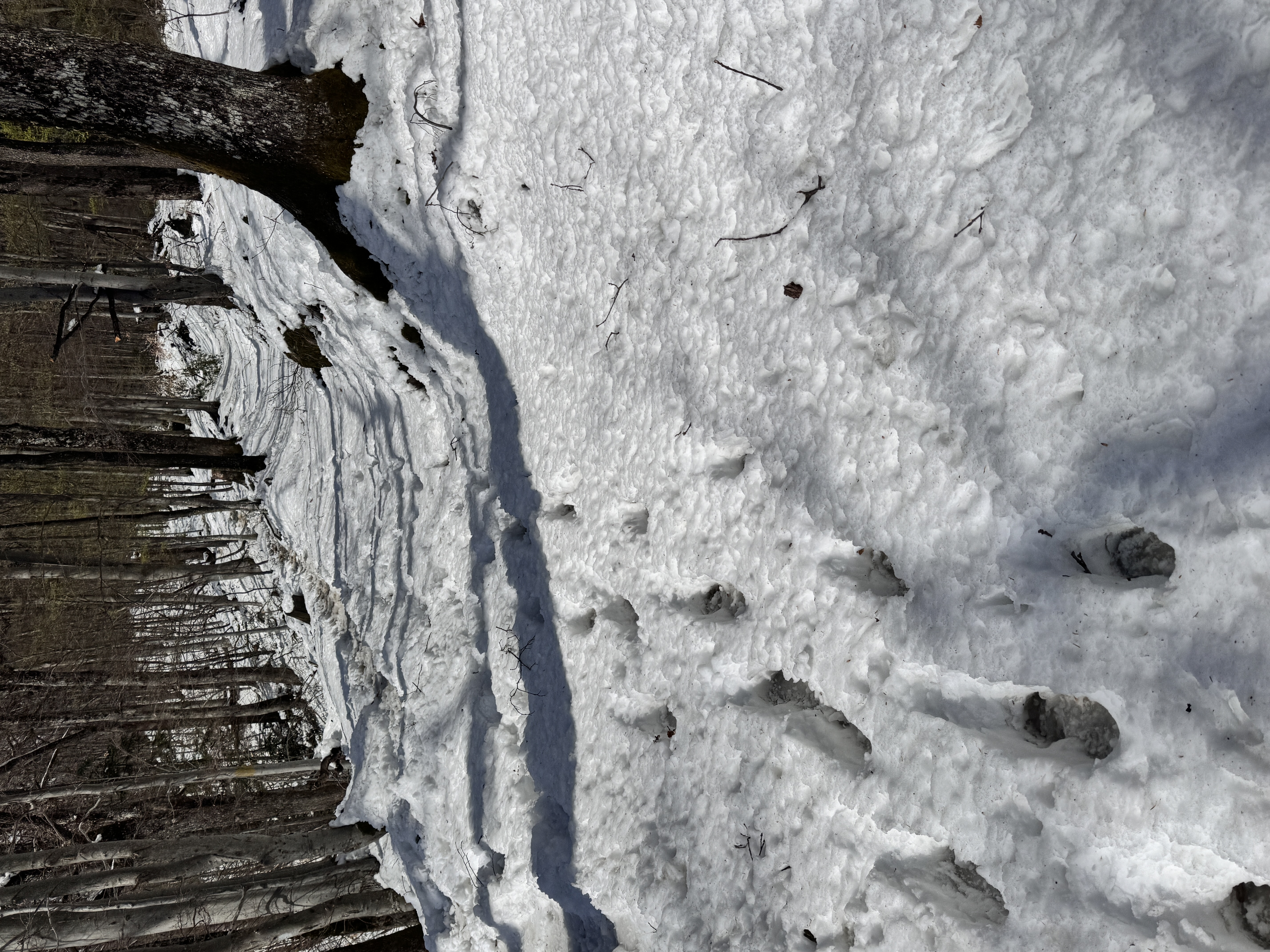
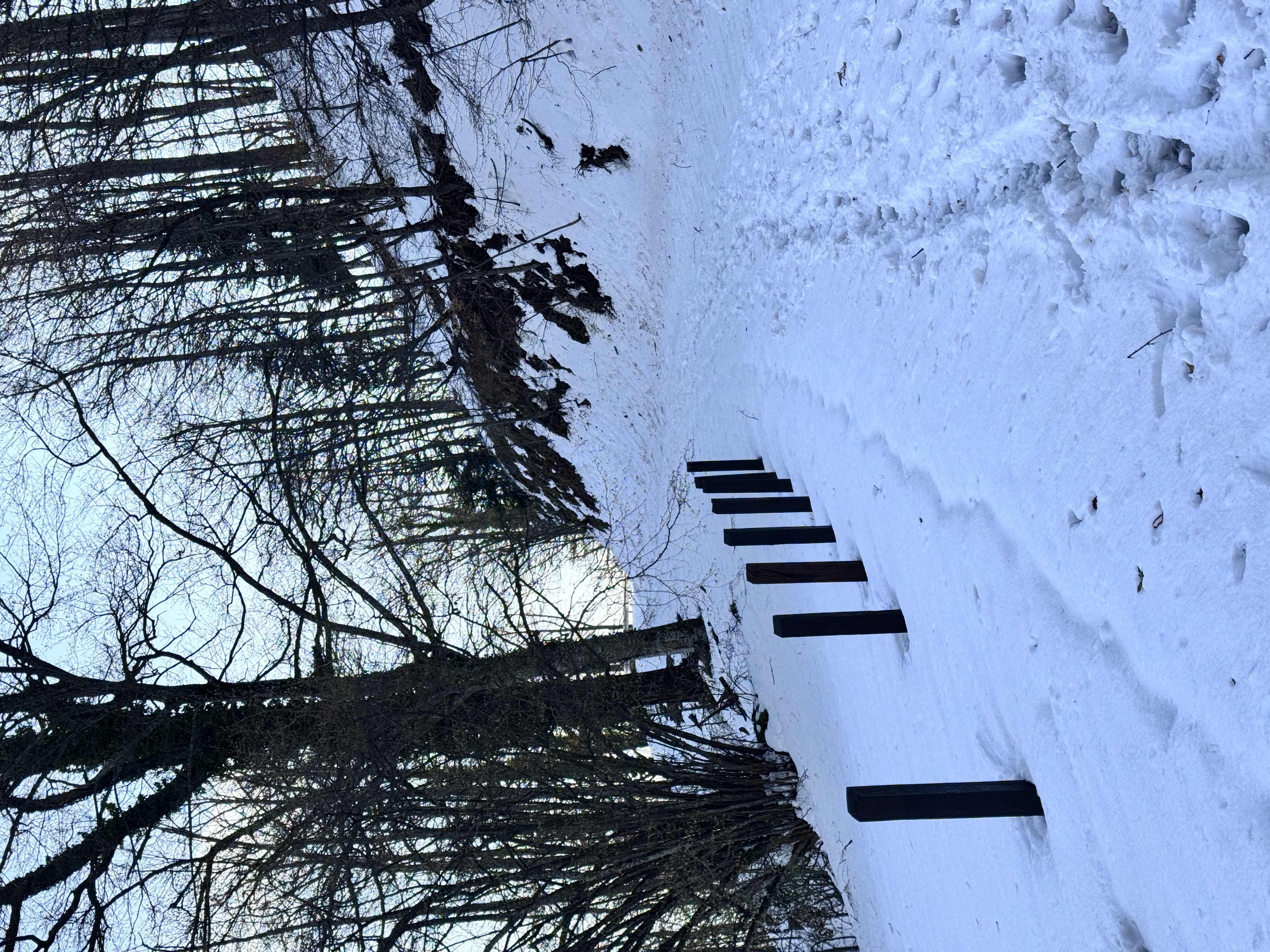
The ground transitioned from dark brown to pearl white, and the snow bled onto our path. While mildly exciting, we were worried about our socks getting wet. A few steps later, the worry vanished: they were soaked.
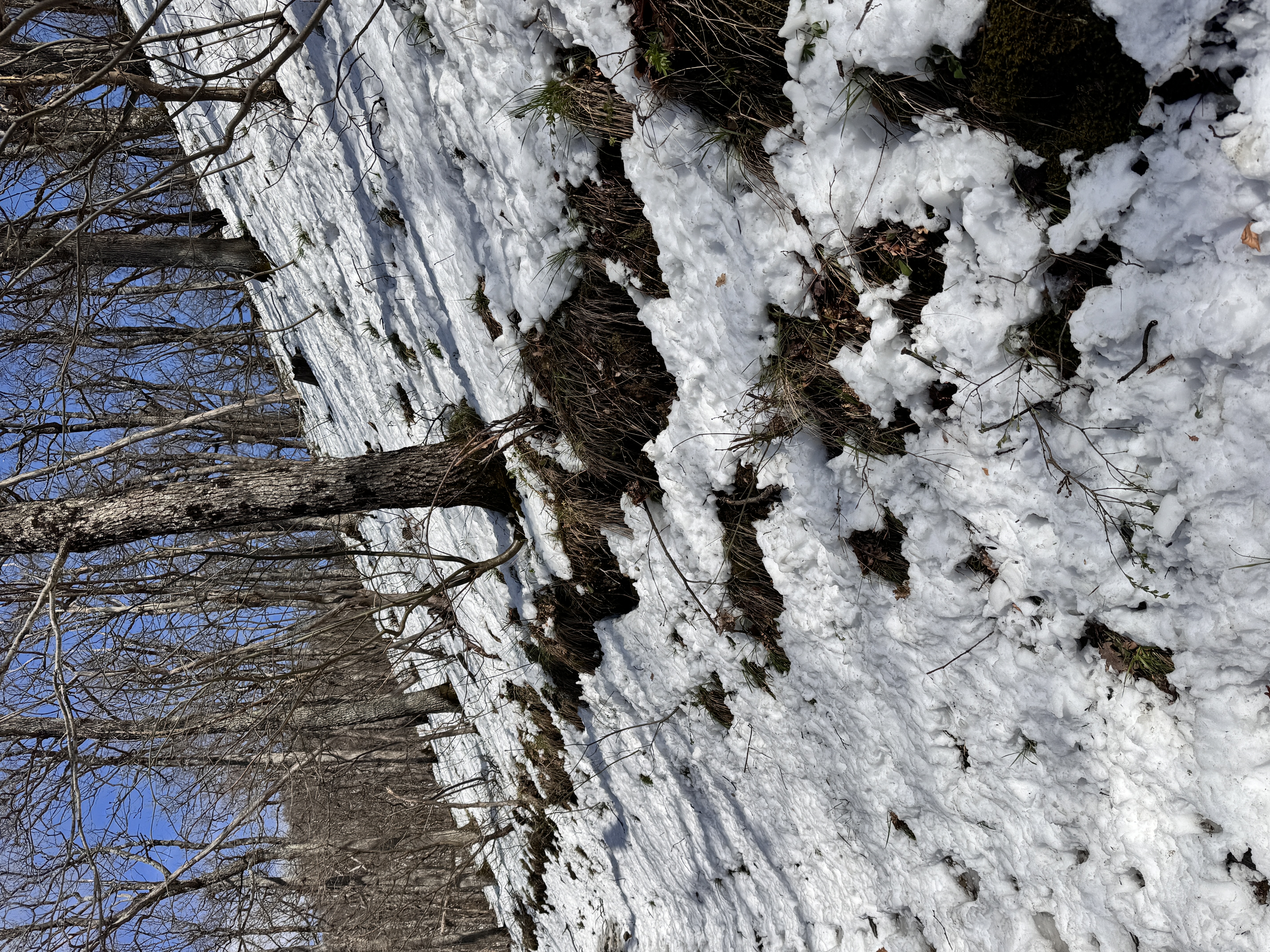
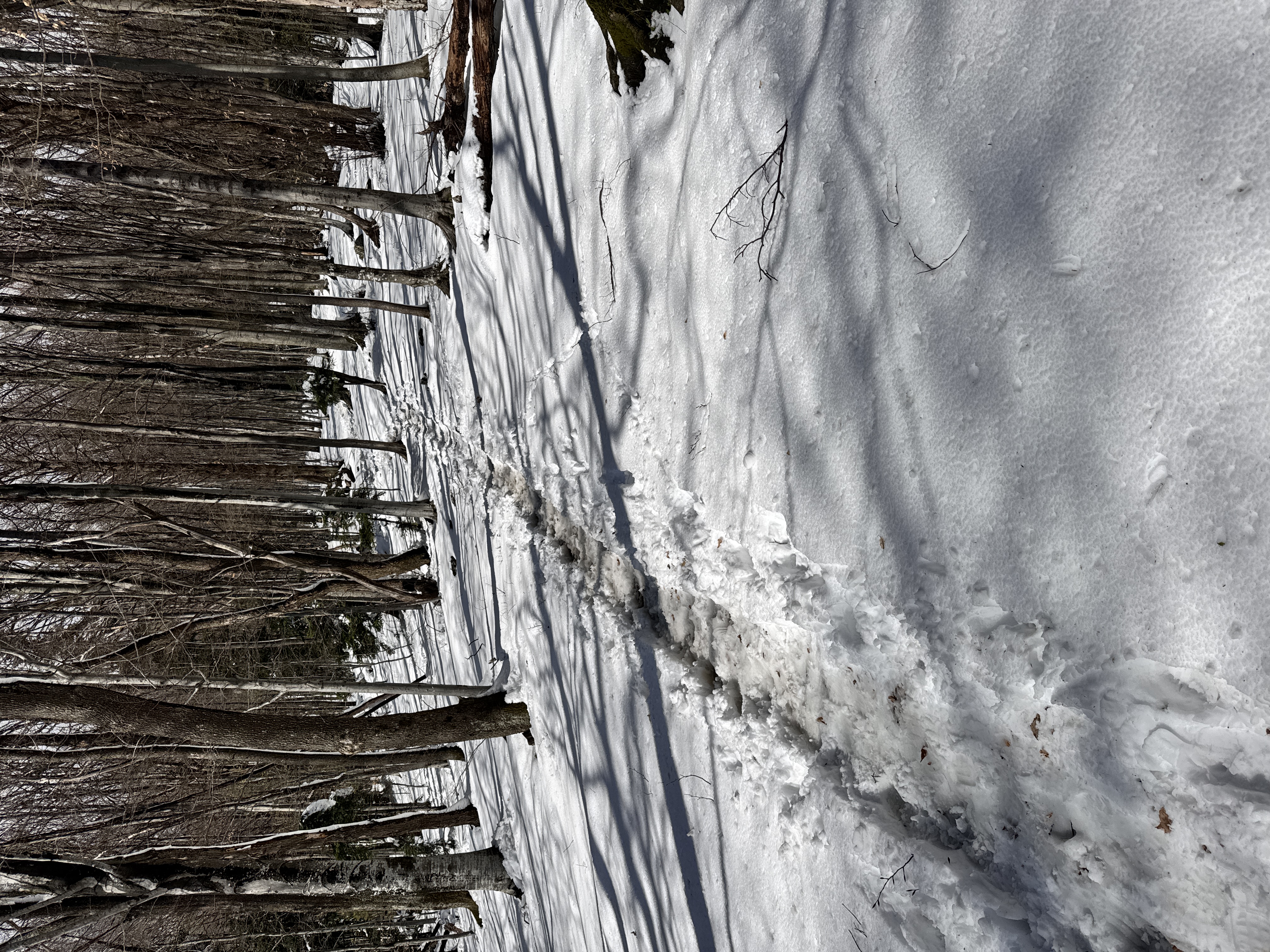
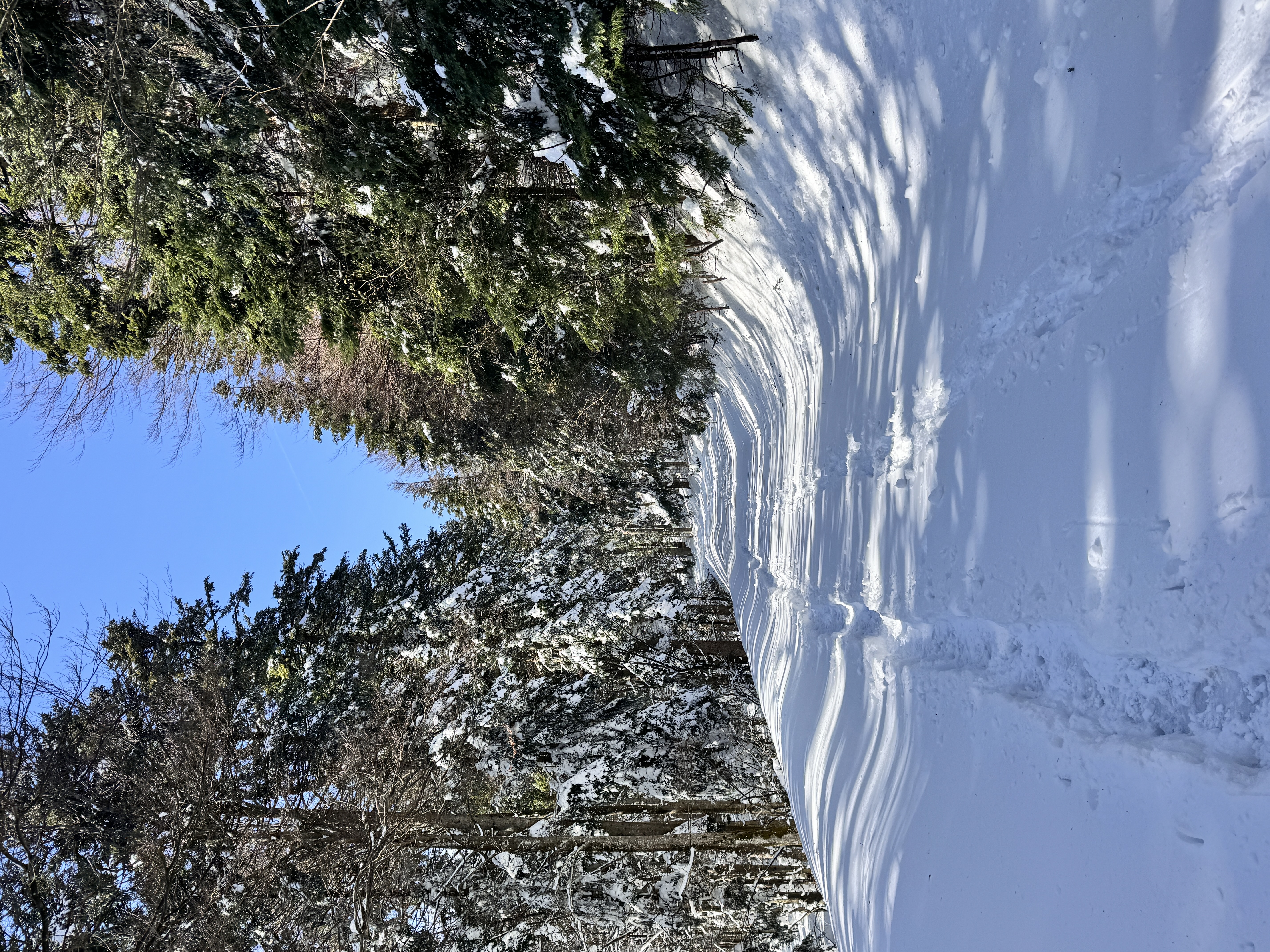
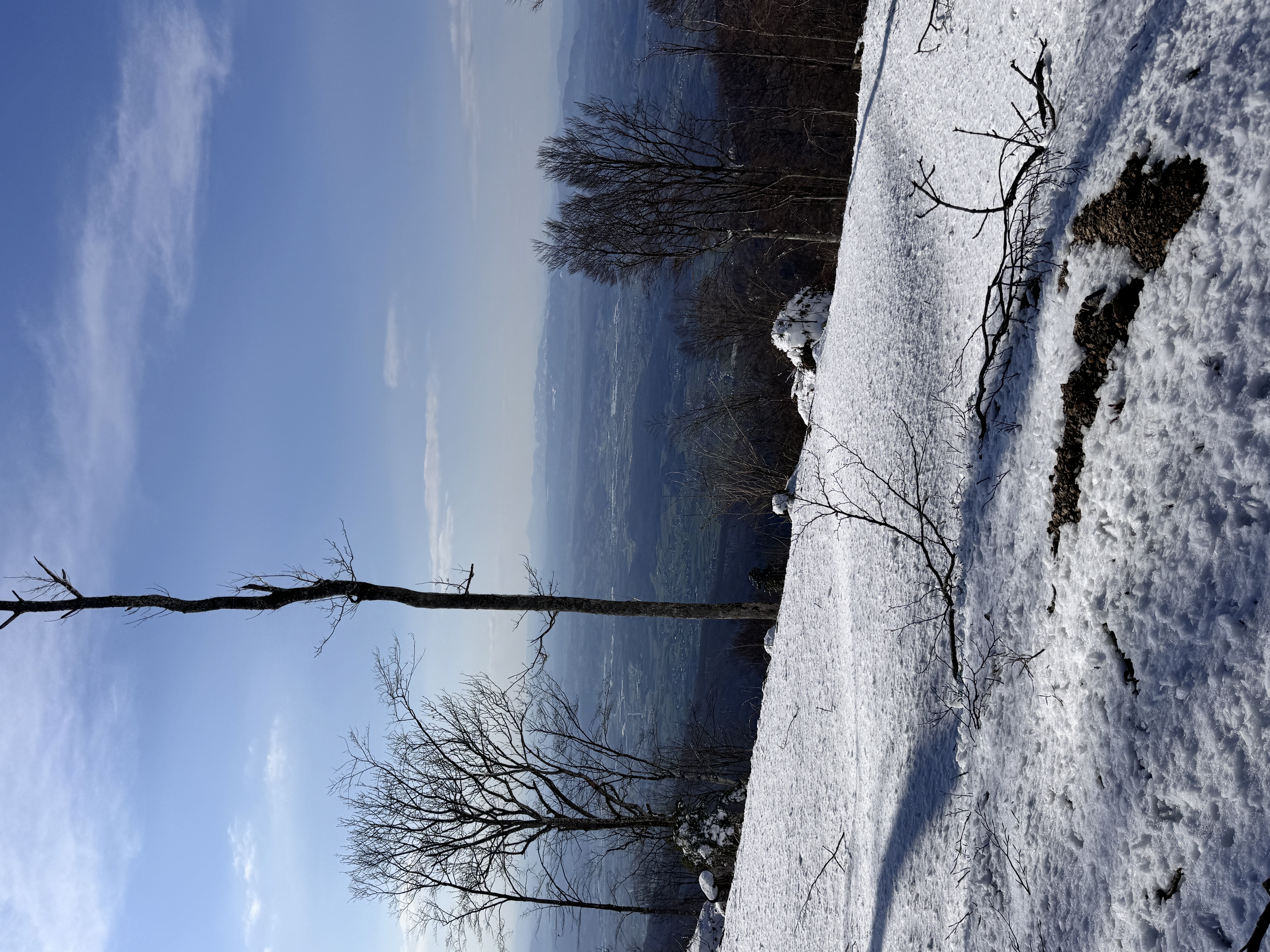
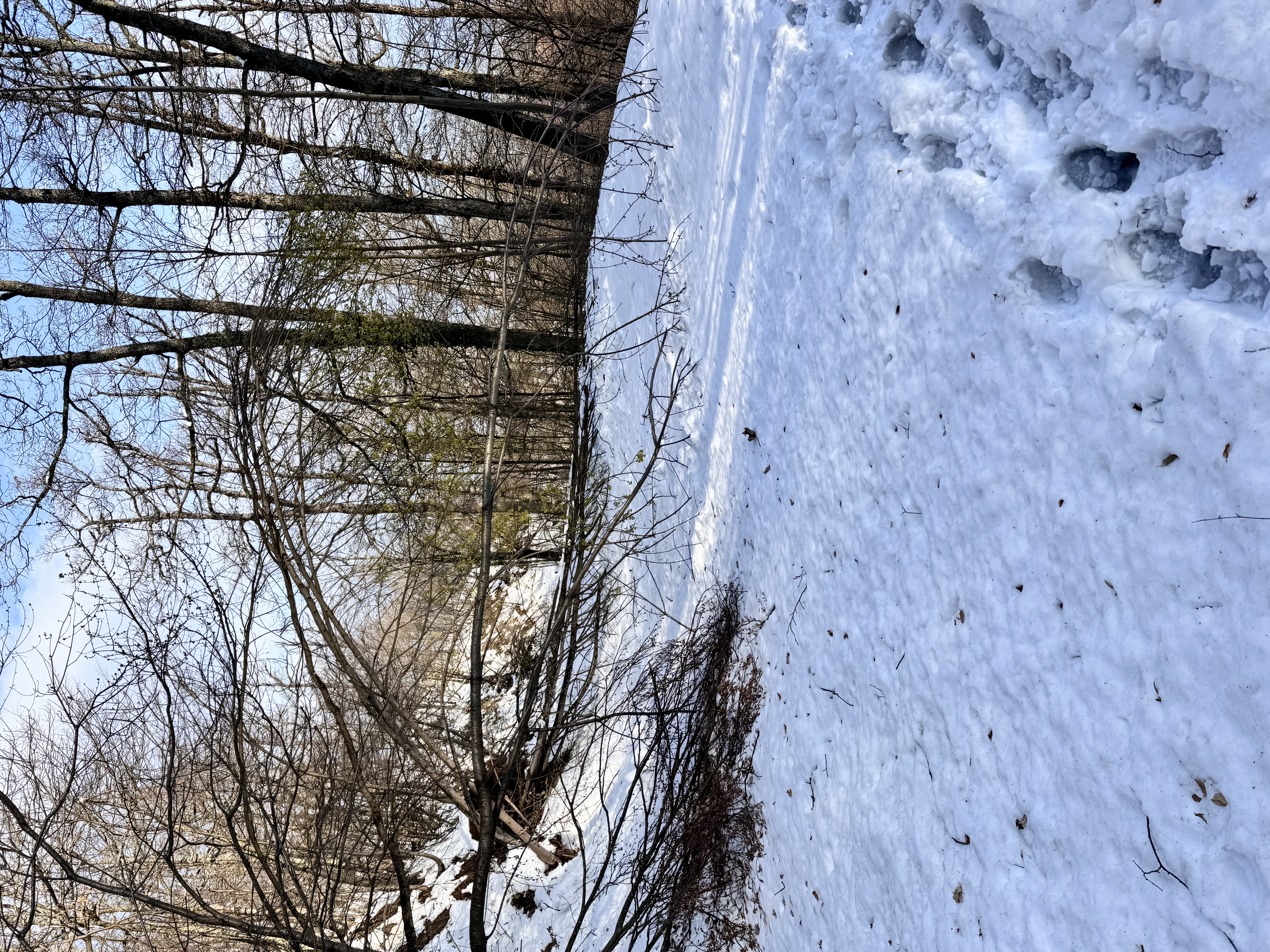
An hour and a half in and the light dusting had turned into packing snow well over thirty centimeters deep. We tried stepping into the footprints of previous hikers to save energy. But, as thermodynamics dictates, compressing the snow increases its density and turns it into little sheets of ice. We went back and forth between reusing footprints and treading our own path. The terrain grew incredibly steep. Every few minutes, one of us would slip in the snow, catching ourselves with our hands. Slipping uphill wasn’t a big deal, but it made one thing perfectly clear: going back down this same path in sneakers was not an option.
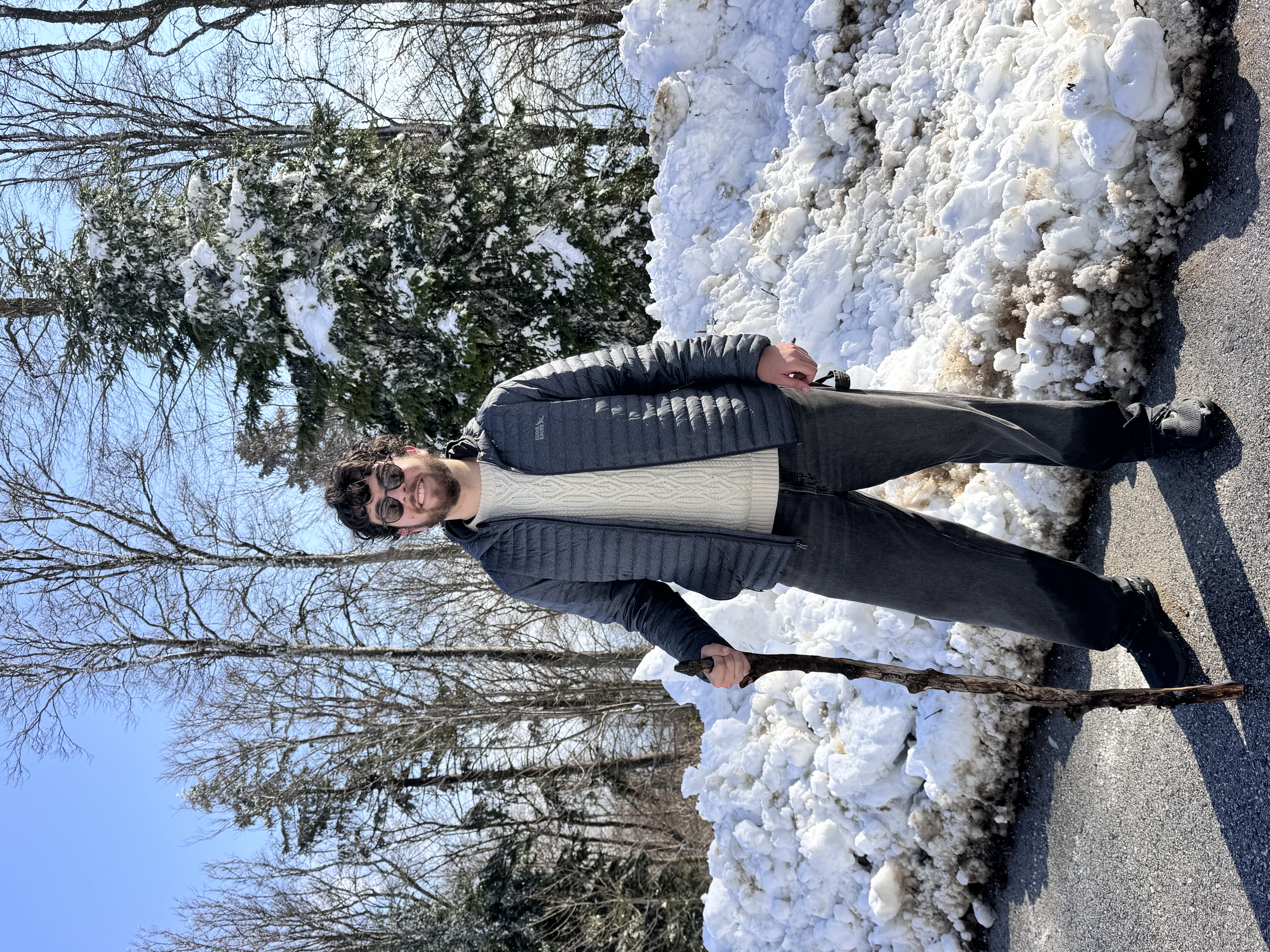
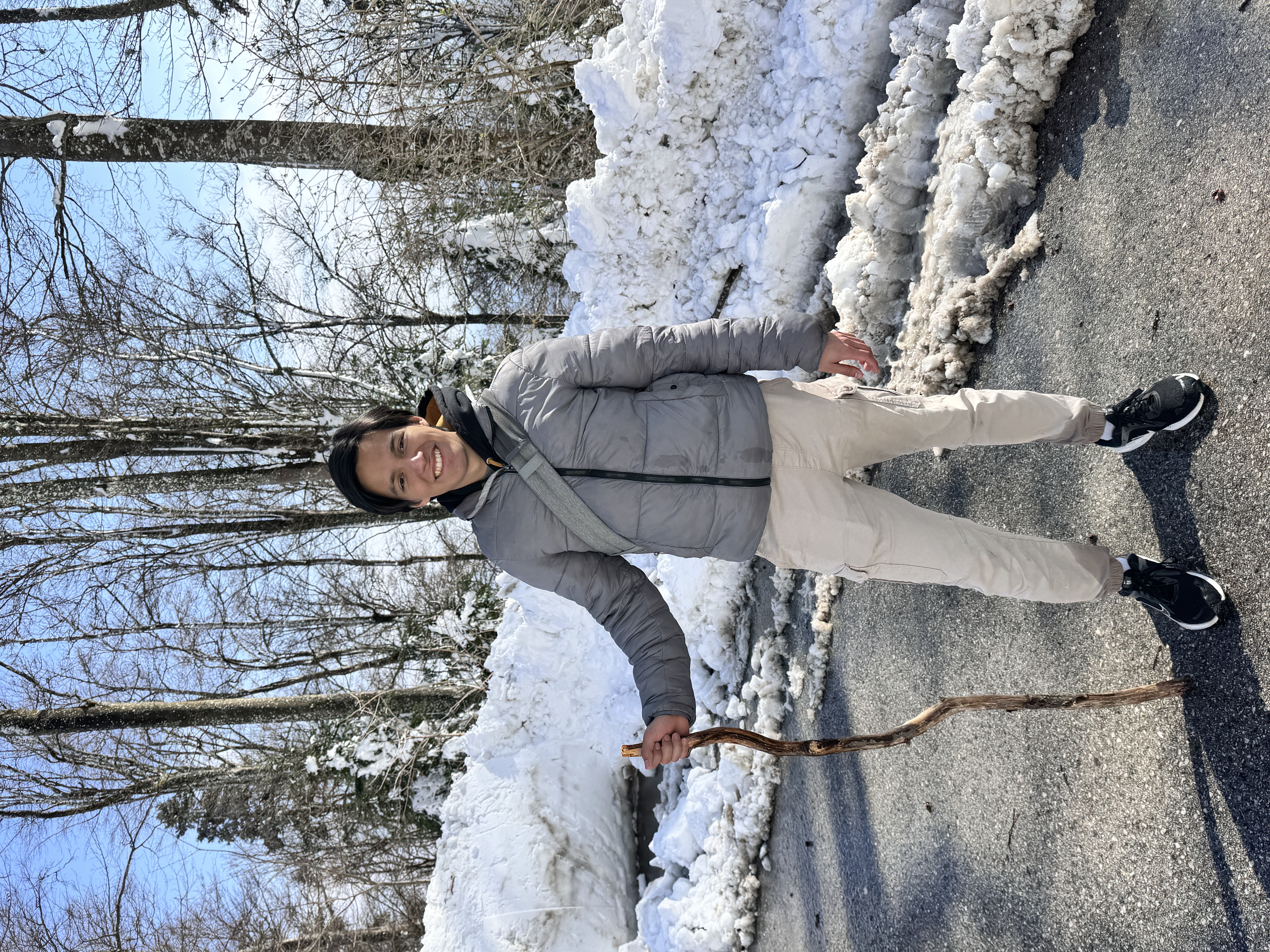
Desperate for some traction, I realized that even though we didn’t have real hiking poles, we could just make our own. We started scanning the forest floor for fallen branches. They had to be about a meter long, sturdy, but not too heavy. I felt a bit like Goldilocks. This stick is too long! This stick is too short. This one is too… bendy. Finally, just right! Within minutes, we were each armed with makeshift gear. As we climbed, we would occasionally spot a superior piece of wood and upgrade our models. It was completely primitive, but those branches were a massive relief and saved us both from many spills.
Getting closer to the top, I checked my phone for the cable car schedule. Translating the page from Croatian to English, I read “Due to strong winds, the cable car is not operating today.”
We were two hours deep, trapped between a descent too slippery for our shoes and a summit with no easy way out. The only viable option was to keep pushing upward. Google Maps showed roads at the top and buses running every hour. Worst case, we figured, we’d catch a taxi.
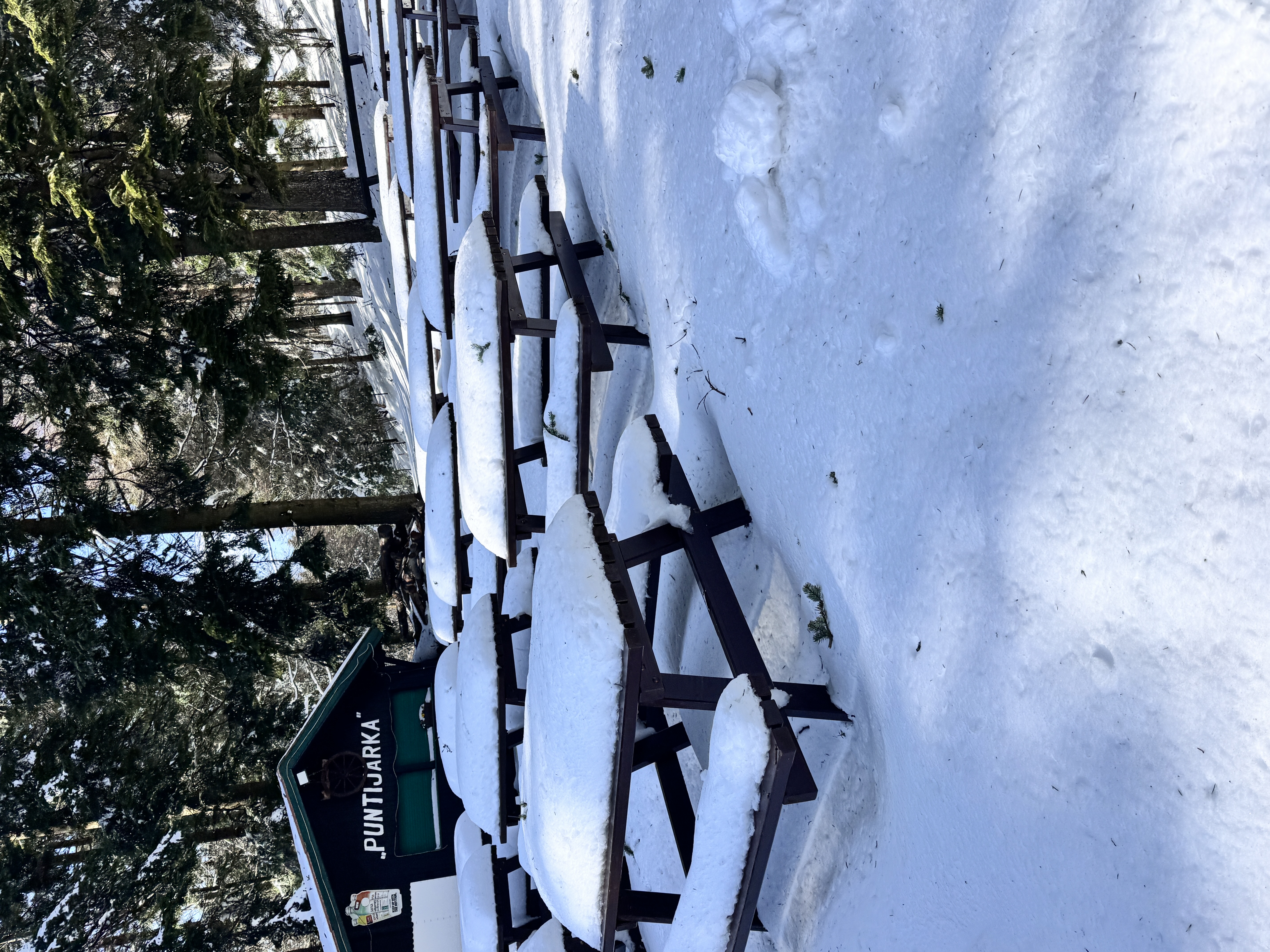
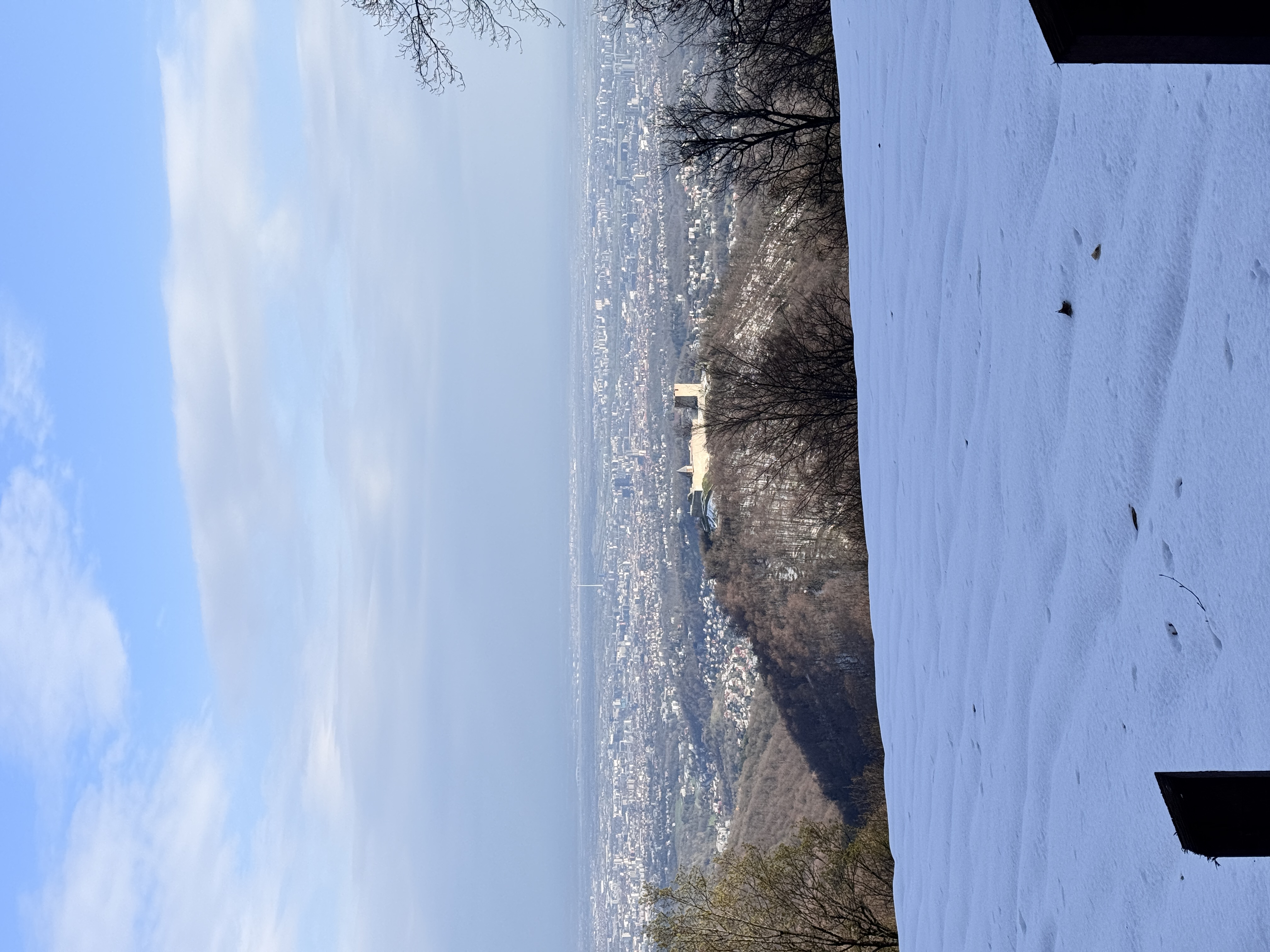
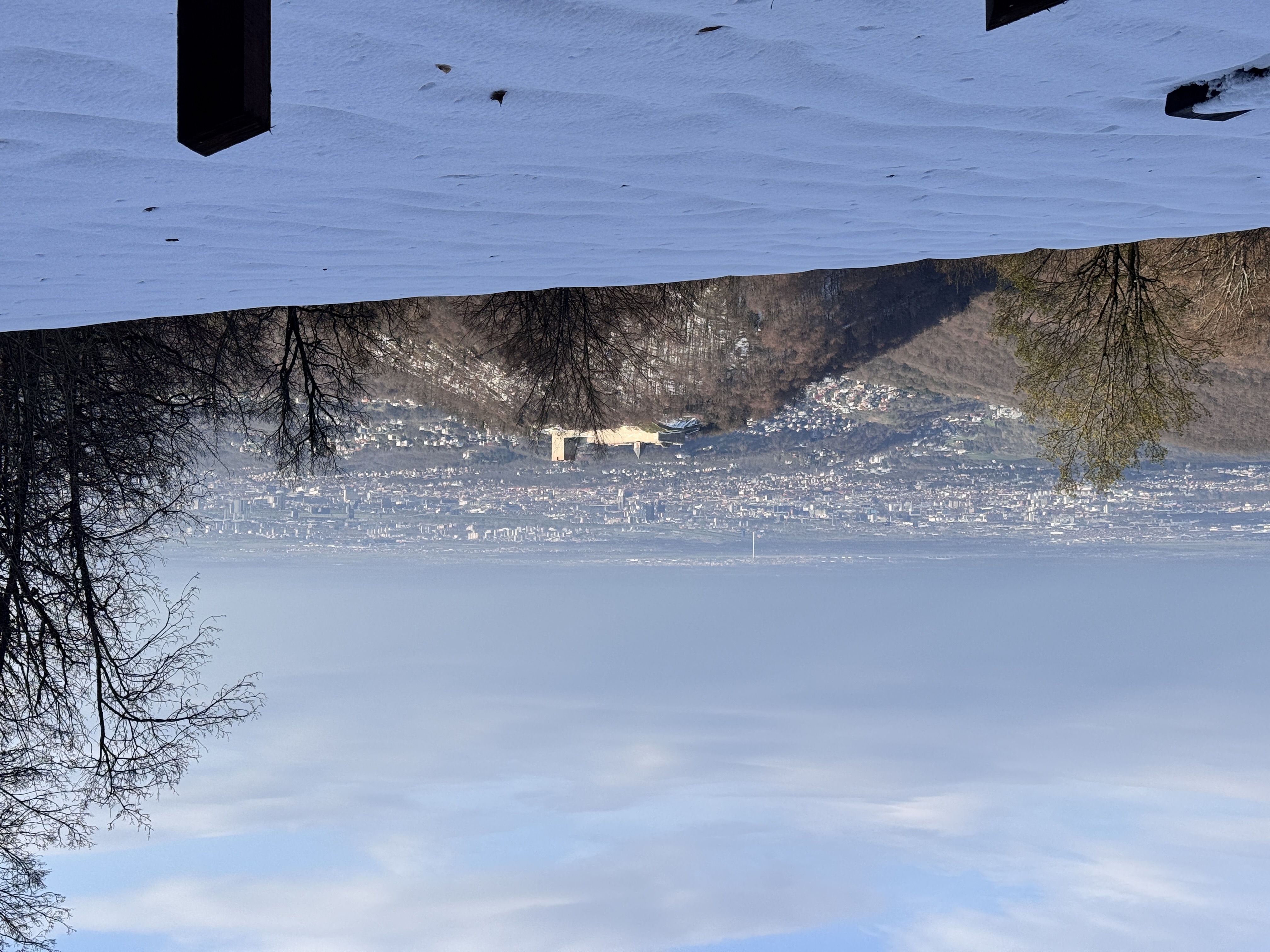
We soon reached a wooden rest station, though it looked more like a summer restaurant, surrounded by picnic tables buried under feet of snow. We scraped one off and sat down to our lunch: an assortment of pastries from a local pekara. Within minutes, we had eaten all but one. I decided to save the last pastry in my bag. I was still hungry, and it would only get staler, but somehow, being stuck on a snowy mountain with a pastry felt mildly more comforting than being stuck without one.
Up a small hill from the rest station was a road marked with a bus stop sign. As we approached, we saw the road was buried in a foot of snow, marked only by some footprints. No tire tracks. It was clear the bus was not coming. The rational move would have been to pause, reassess, and formulate a real plan. Of course this is not what we did. We were only thirty minutes from the peak; how could we turn back?
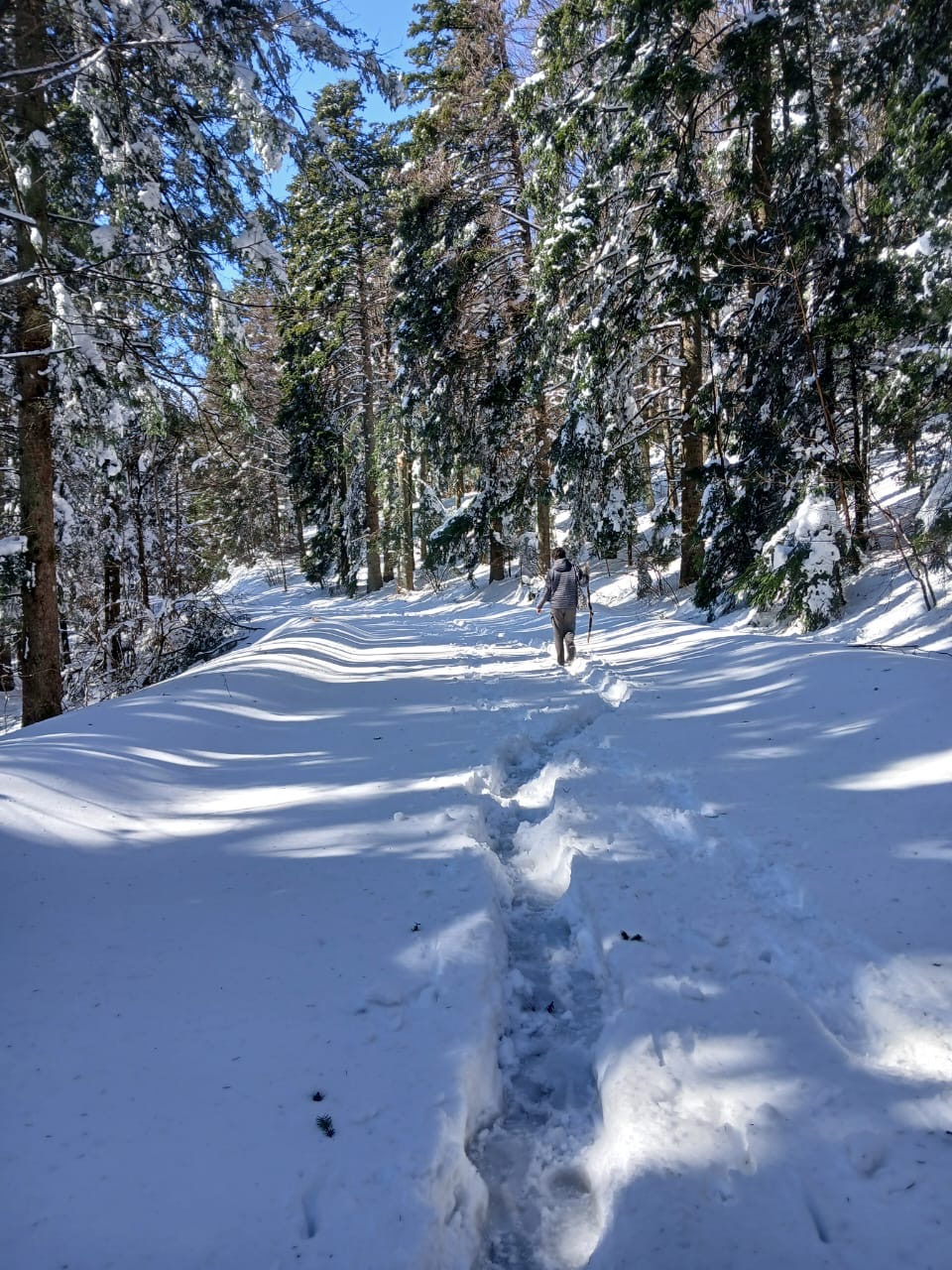
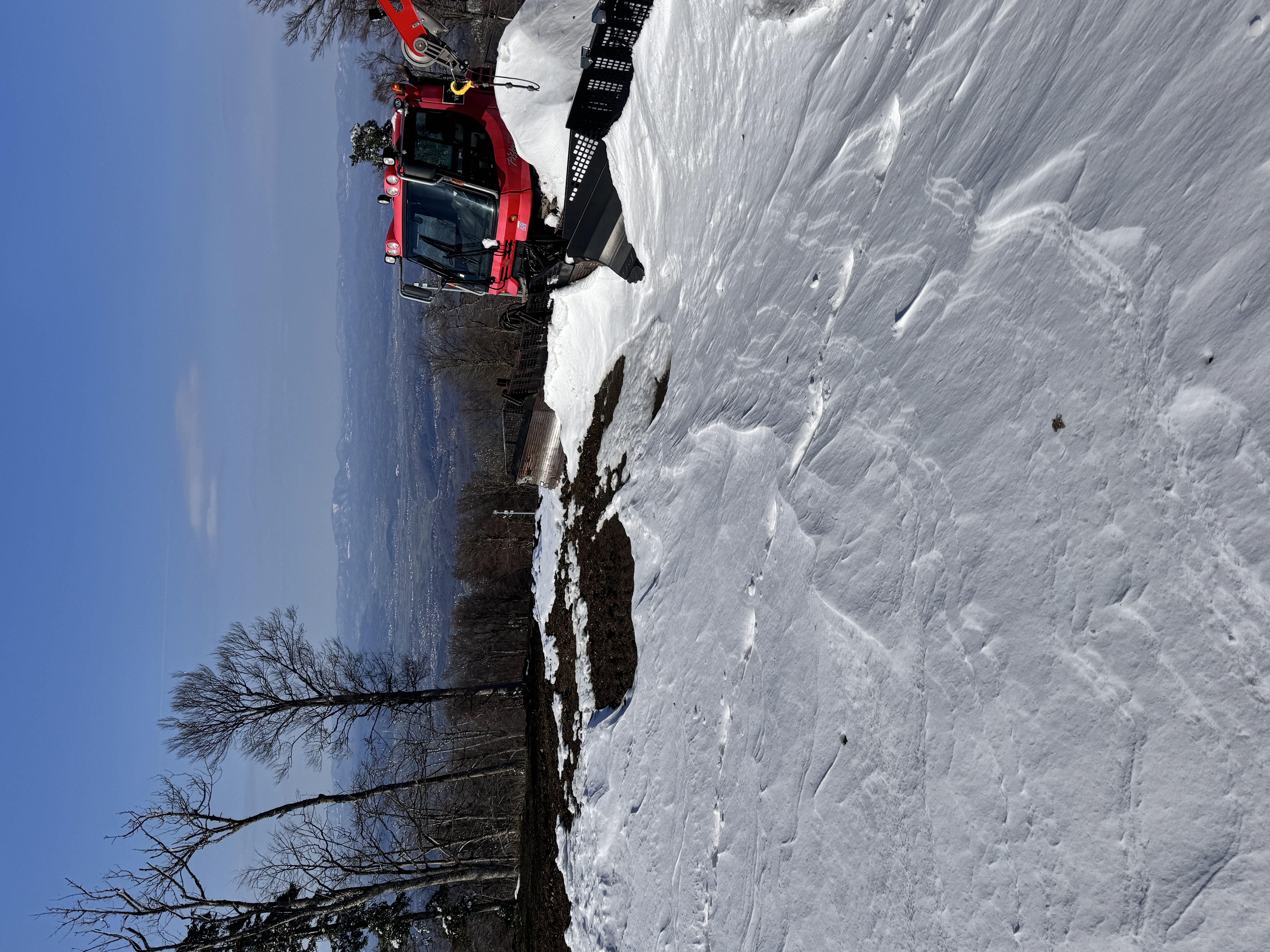
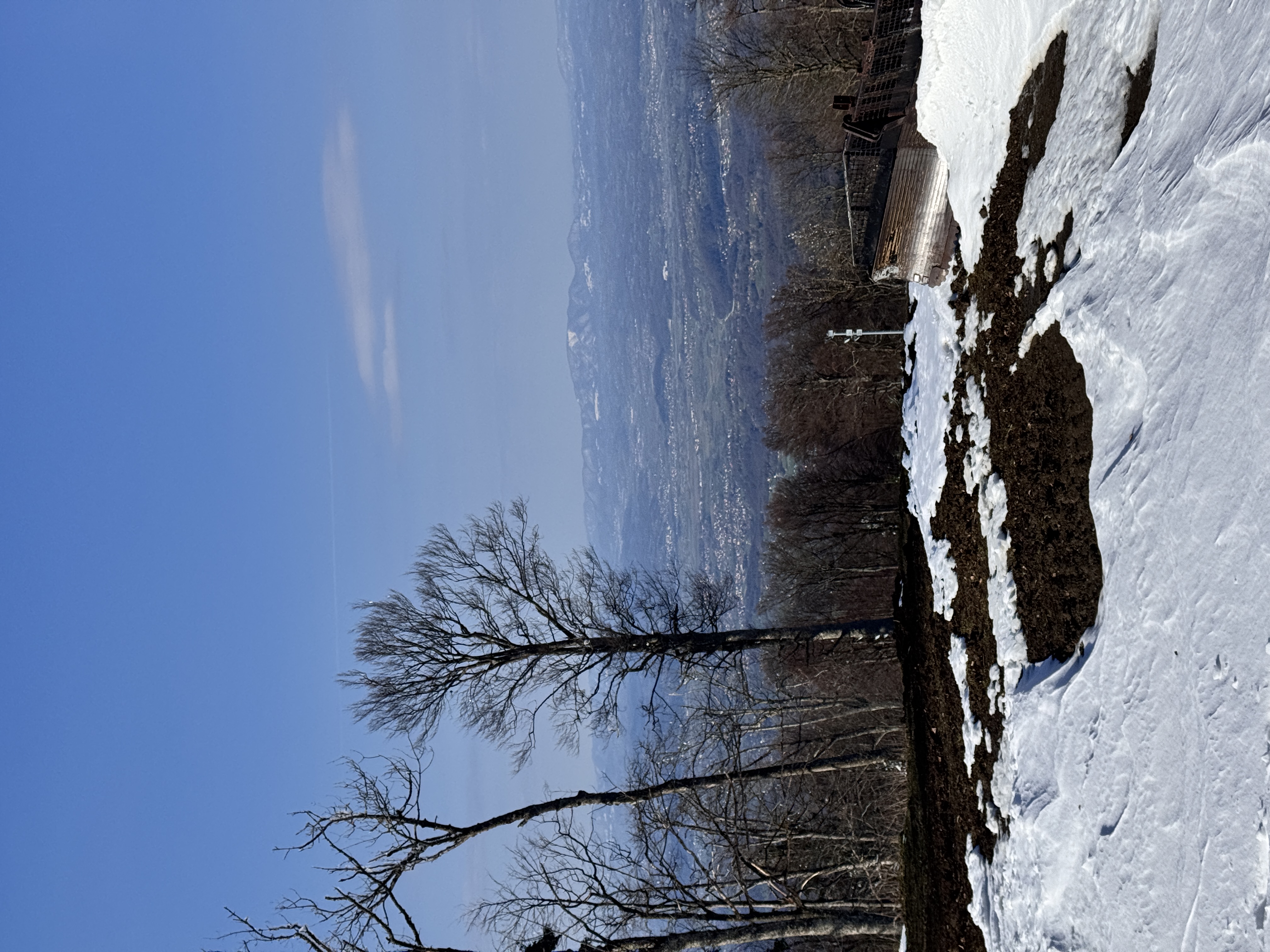
We walked along the snow covered road for about 10 minutes. There were occasional patches that were cleared from snow. On top of the mountain was a lodge overlooking the ski hills. There were a few cars driving around on these small sections of cleared road. Looking back, it is a mystery to me where they were going. Was there a cleared road down the mountain? Or were they just driving between different buildings at the top?
We trudged along until we reached the final obstacle: a hundred-meter ski hill. The snow was free of footprints, making it a nightmare to climb. As we struggled up, two men in ski masks and parkas were walking down. Bizarrely, they were wheeling bicycles. One would occasionally try to ride, only to sink into the deep snow.
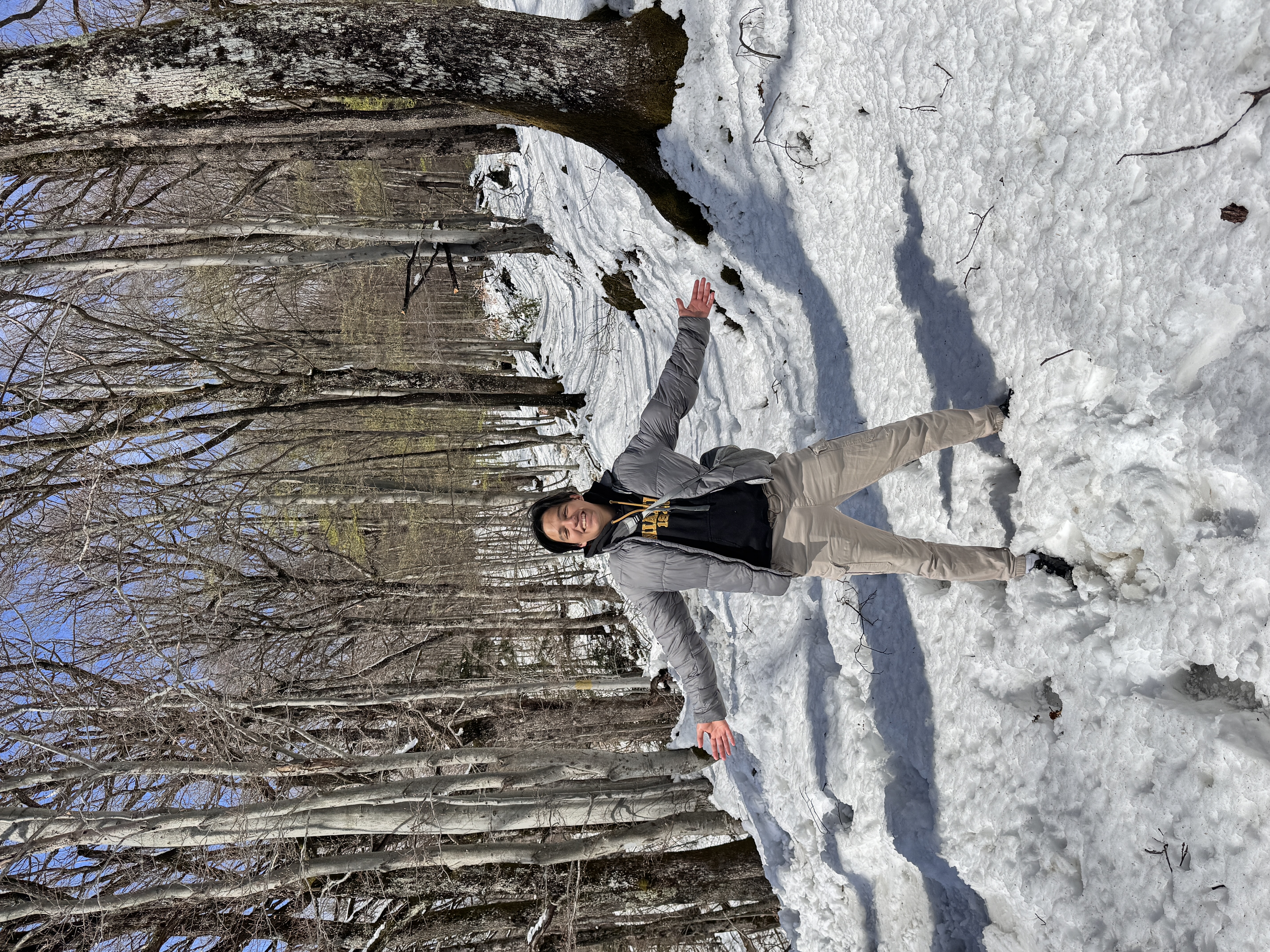
“Do you speak English?” I asked the one in front. He shook his head and pointed to his friend.
“Do you know how to get down this mountain?” I asked.
“That is a good question,” he replied. “Where are you going?”
“Zagreb” I answered.
“We are looking for a way down ourselves. It seems you guys are as fucked as we are,” he laughed. He told us to continue up, turn left at the cafeteria, and walk down the road. “Make sure to follow the signs for Zagreb, not Stubičke Toplice.” Despite admitting they were entirely lost, the two men proceeded to roll their bikes further down the ski hill.
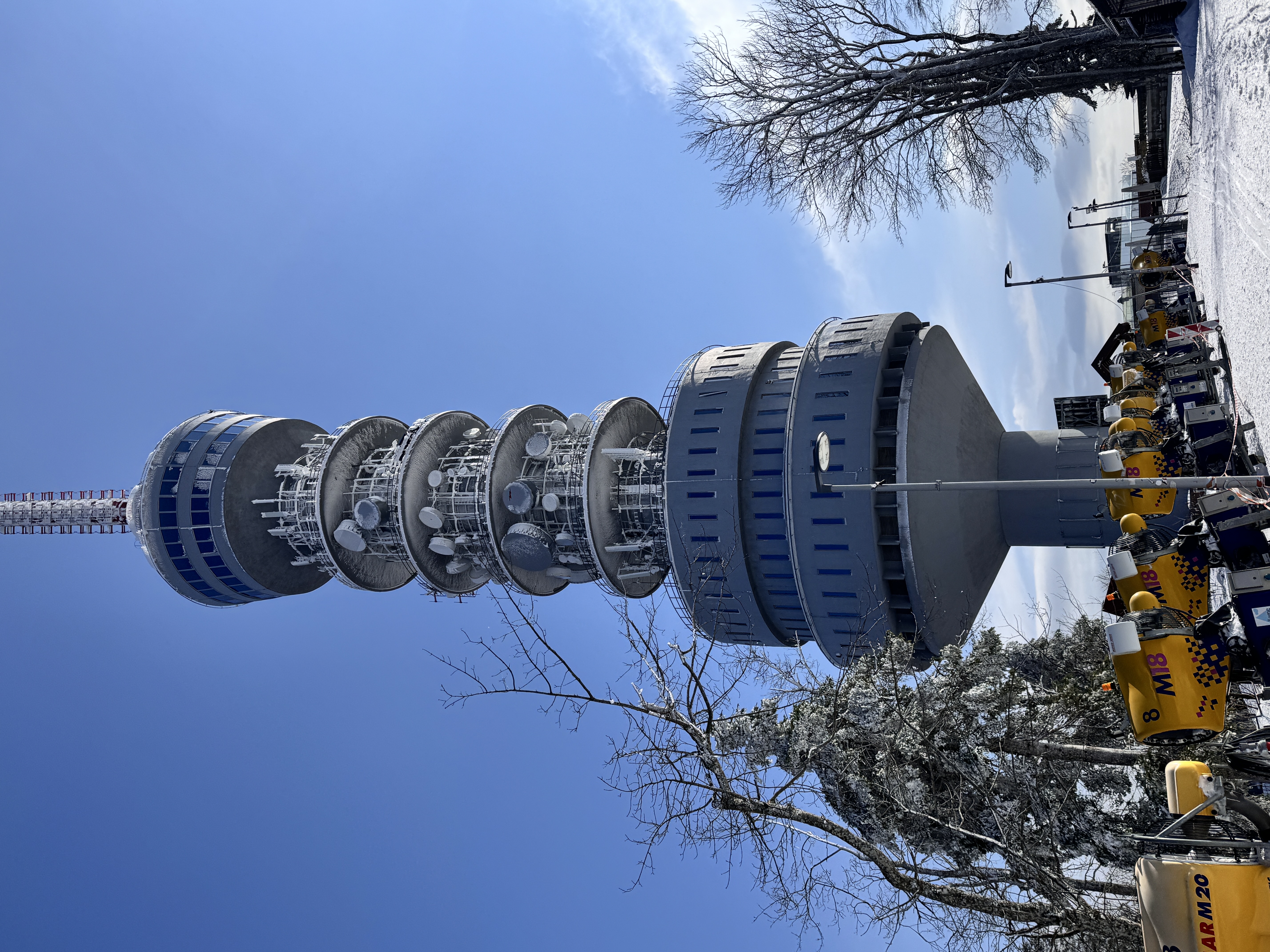
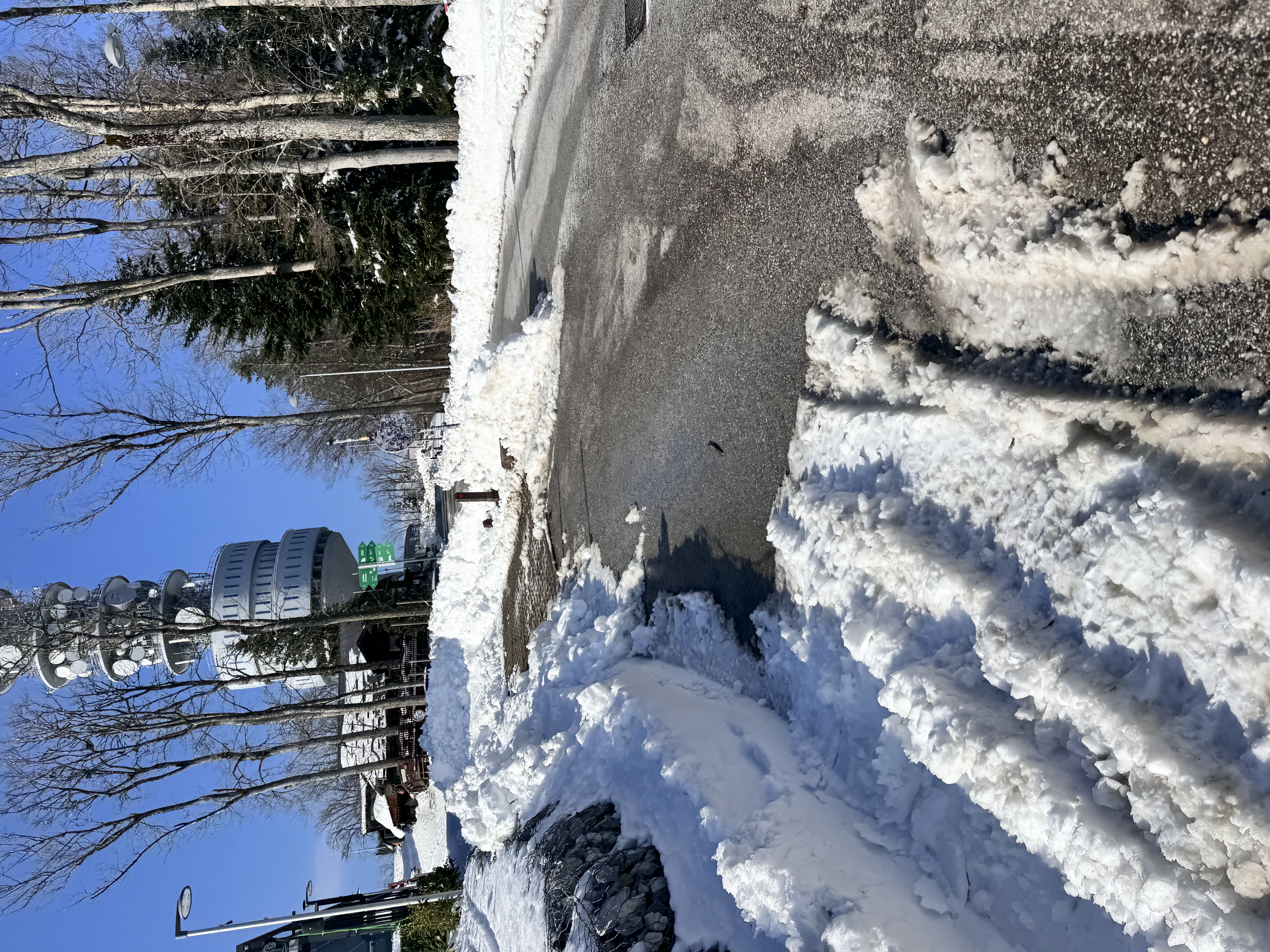
At the top of Sljeme mountain is the Zagreb TV Tower, a 169 meter structure built in 1973. Like much of the architecture across the Balkans, it featured a brutalist design made of mostly concrete. In 1991, during the Croatian War of Independence, the tower was bombed by the Yugoslav Air Force and sustained heavy damage. Reaching the summit of the mountain didn’t feel exciting or triumphant. It was just the first of many steps we had to take in our journey to get home.
Next to the tower was a chalet connected to the dead cable car. Inside, an employee stood by the glass doors. I paced toward him, hoping for directions. As I approached, he took out his keys, locked the doors, and wedged large buckets of salt against them so they couldn’t be forced open. I waved and spoke through the glass. He stared straight ahead, pretending not to notice.Perhaps he thought we were obnoxious tourists, trying to get into a building that was clearly closed. After a minute of trying to gain his attention, we gave up. He had no interest in entertaining a conversation.
Down the driveway in a small parking lot, we spotted two more men. One got into the driver’s seat of a black pickup truck while the other stood in the truck bed.
“Do you speak English?” I asked the man in the back.
“Yes,” he replied with a Slavic accent.
“Do you know how to get down the mountain?” I asked.
“Go on Google Maps, search for bus, take the bus” he responded.
“Are the buses running today?” I asked as the truck began pulling out of the parking space. The man, balancing with his hands on the roof, simply said, “I don’t know,” as they drove away.
In ten minutes, we had met three types of people: the attentive but doomed bikers, the aggressively indifferent chalet worker, and the apathetic man on the truck. Perhaps everyone is one of these three people. I do not blame the second man for not talking to us, or the third for not caring. The bikers were enough for us, for now.
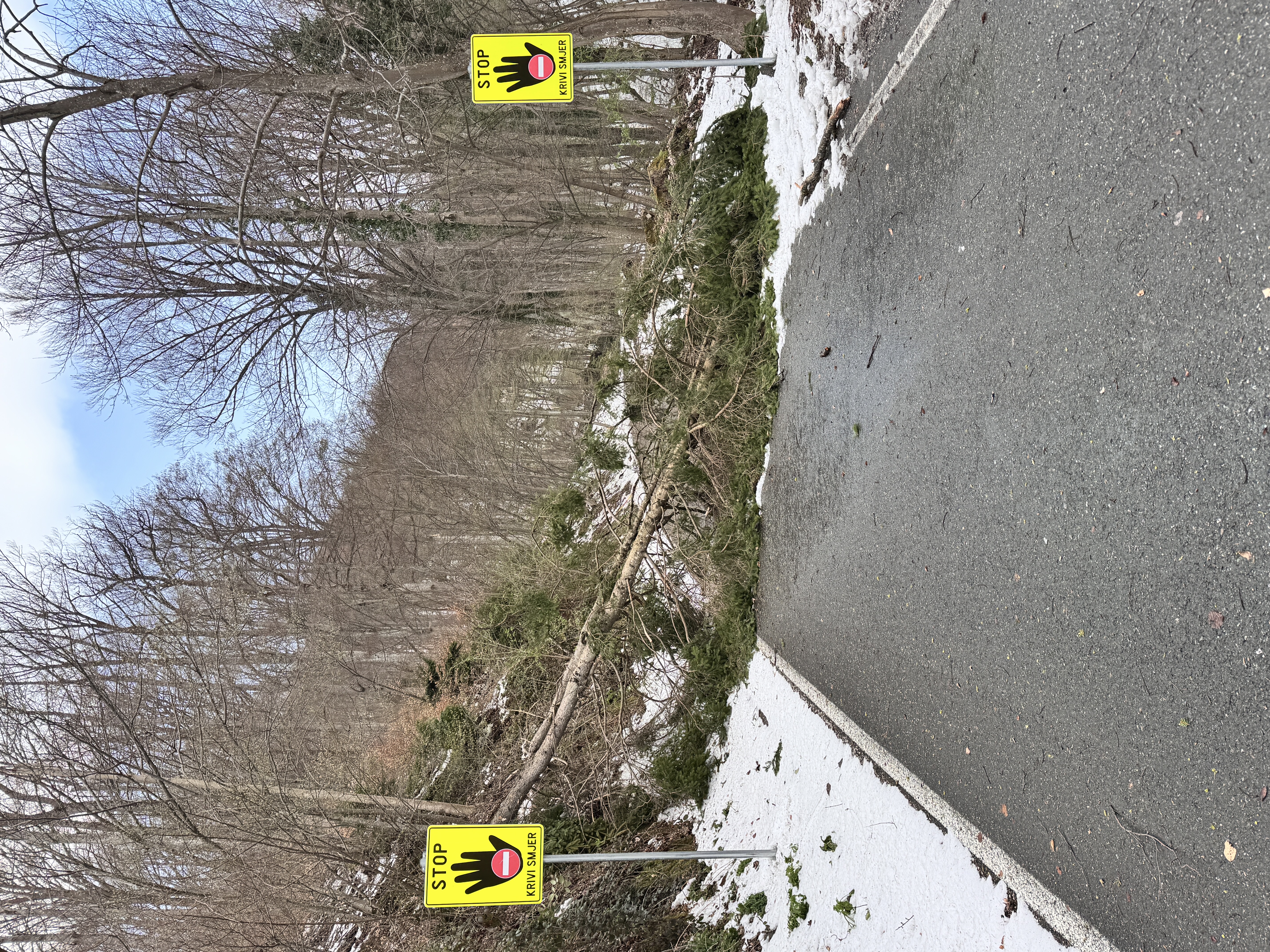
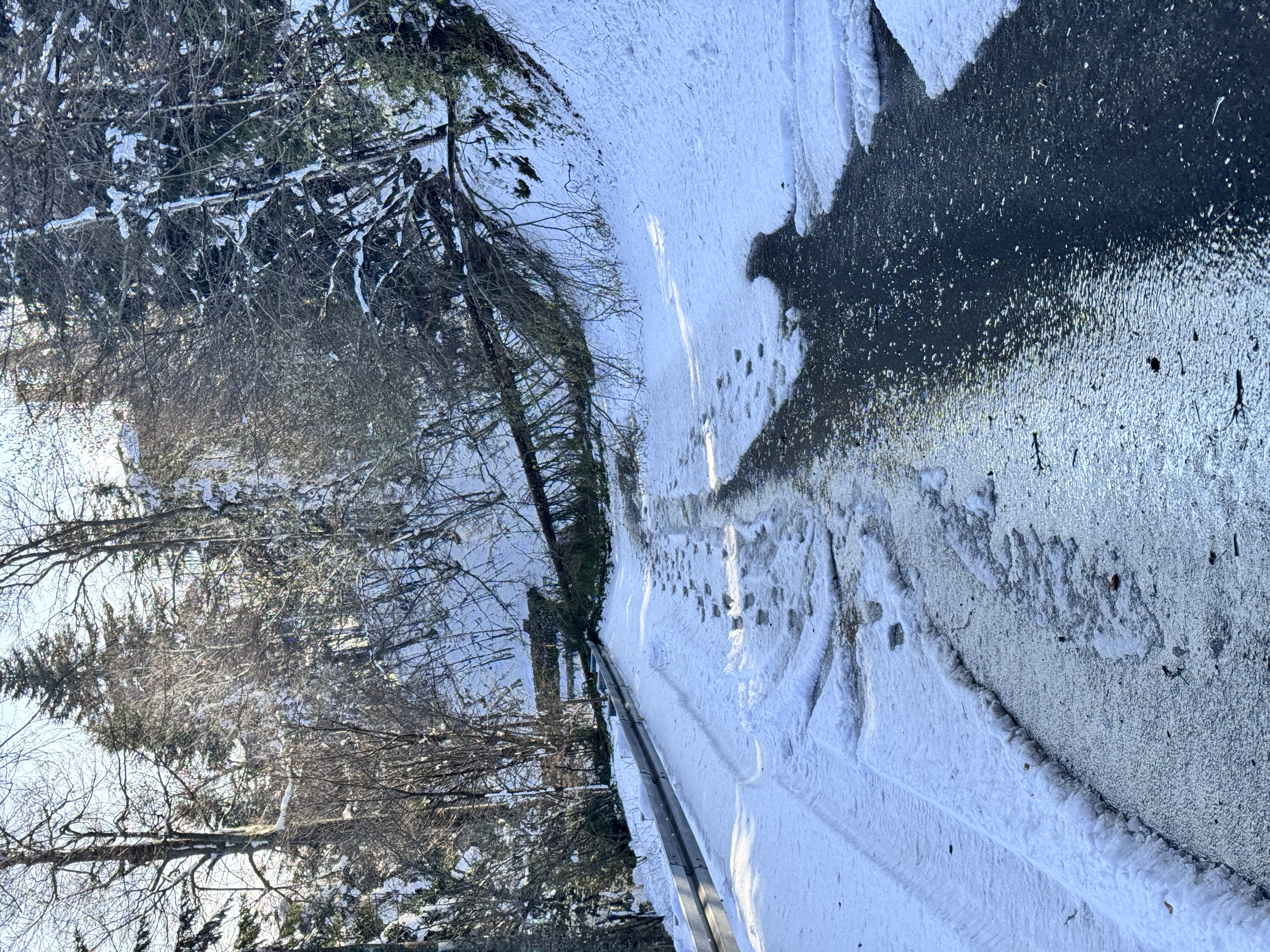
We found the main road and were thrilled to see fresh tire tracks carving through the snow. Walking in them was a breeze compared to the fresh powder. But twenty minutes later, the tracks vanished, abruptly cut off by a massive fallen tree blocking the entire road. Beyond it lay untouched, deep snow. Had the truck turned? Did it get where it needed to go? Was it stuck too?
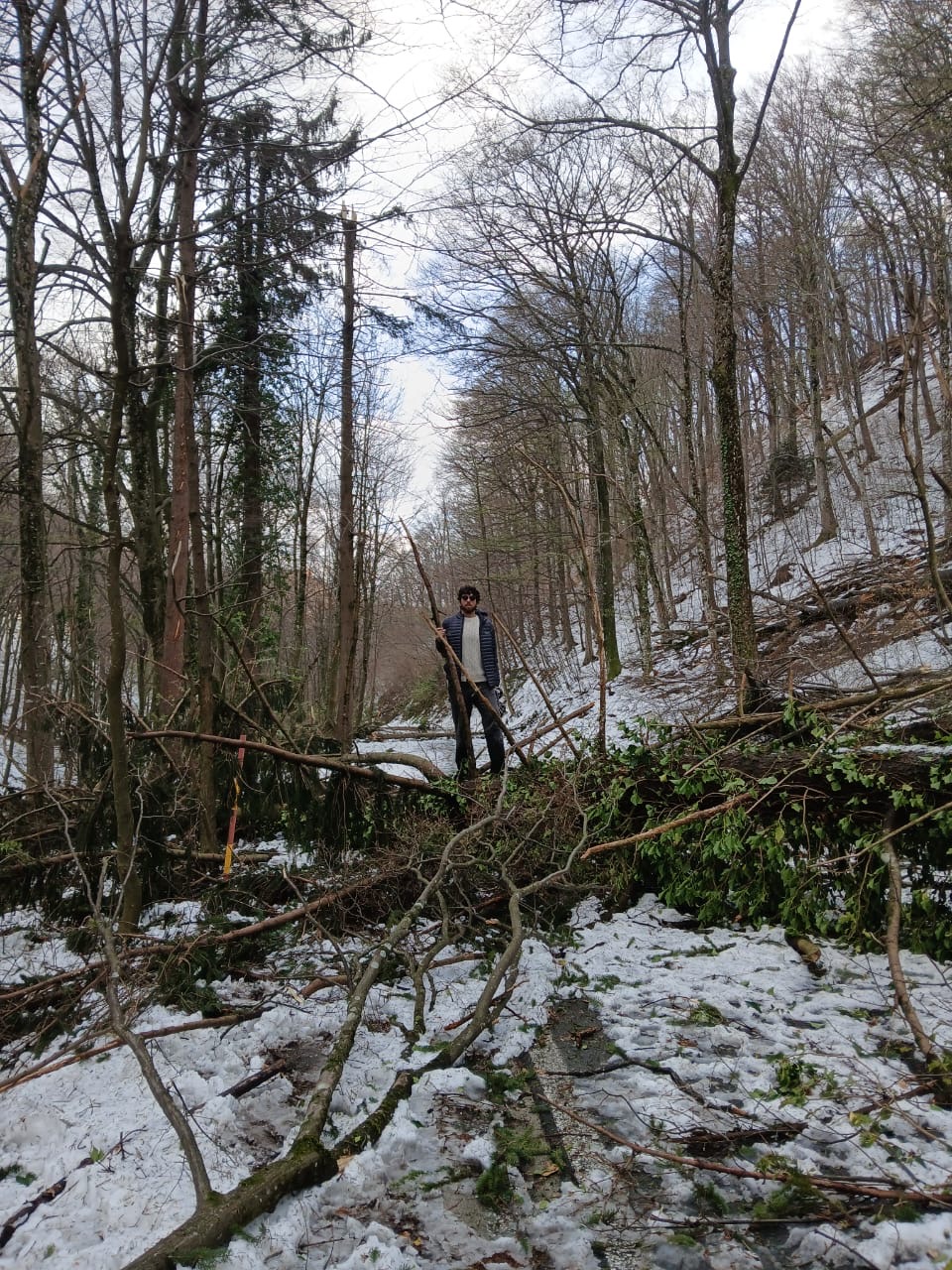
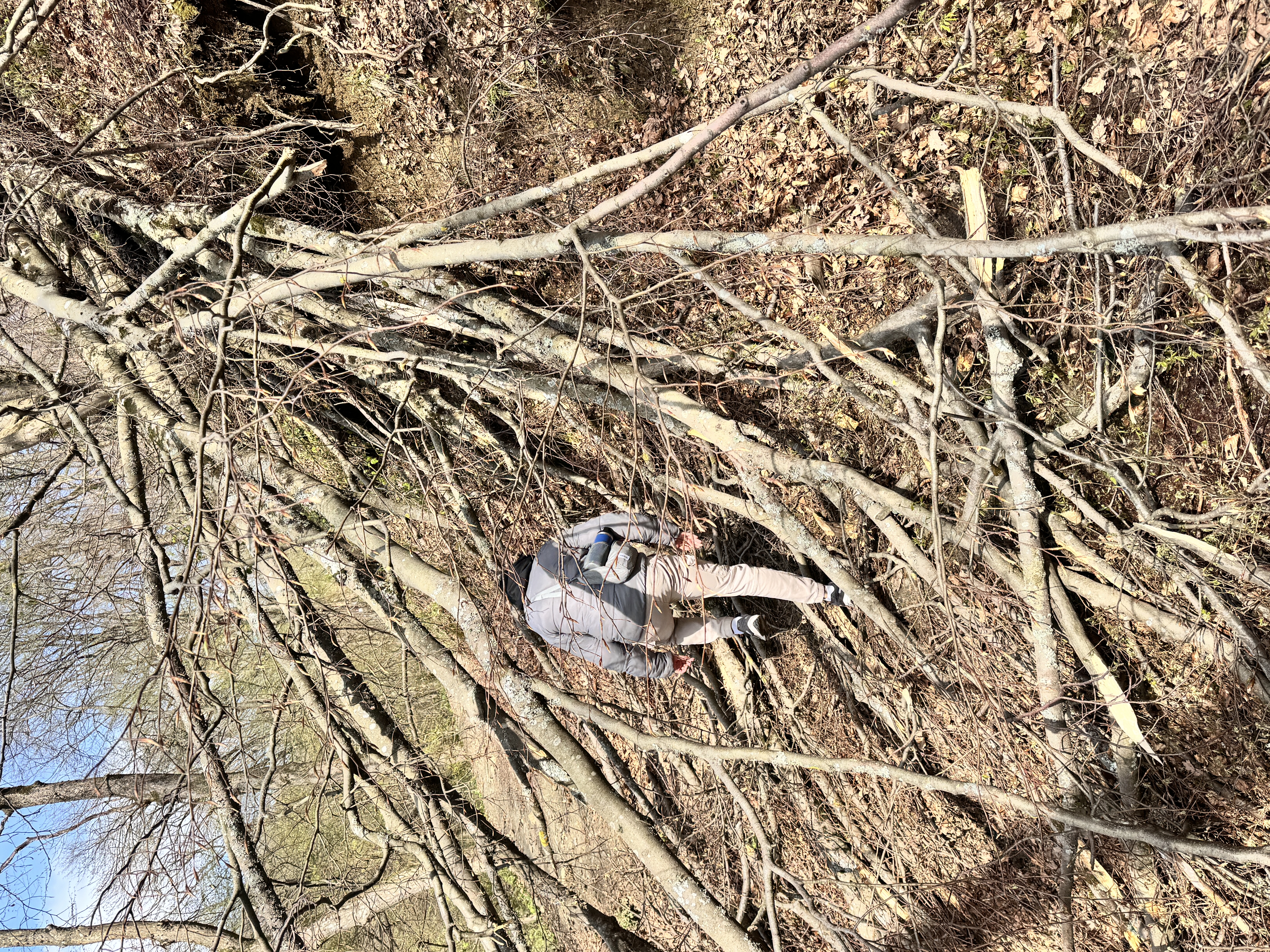
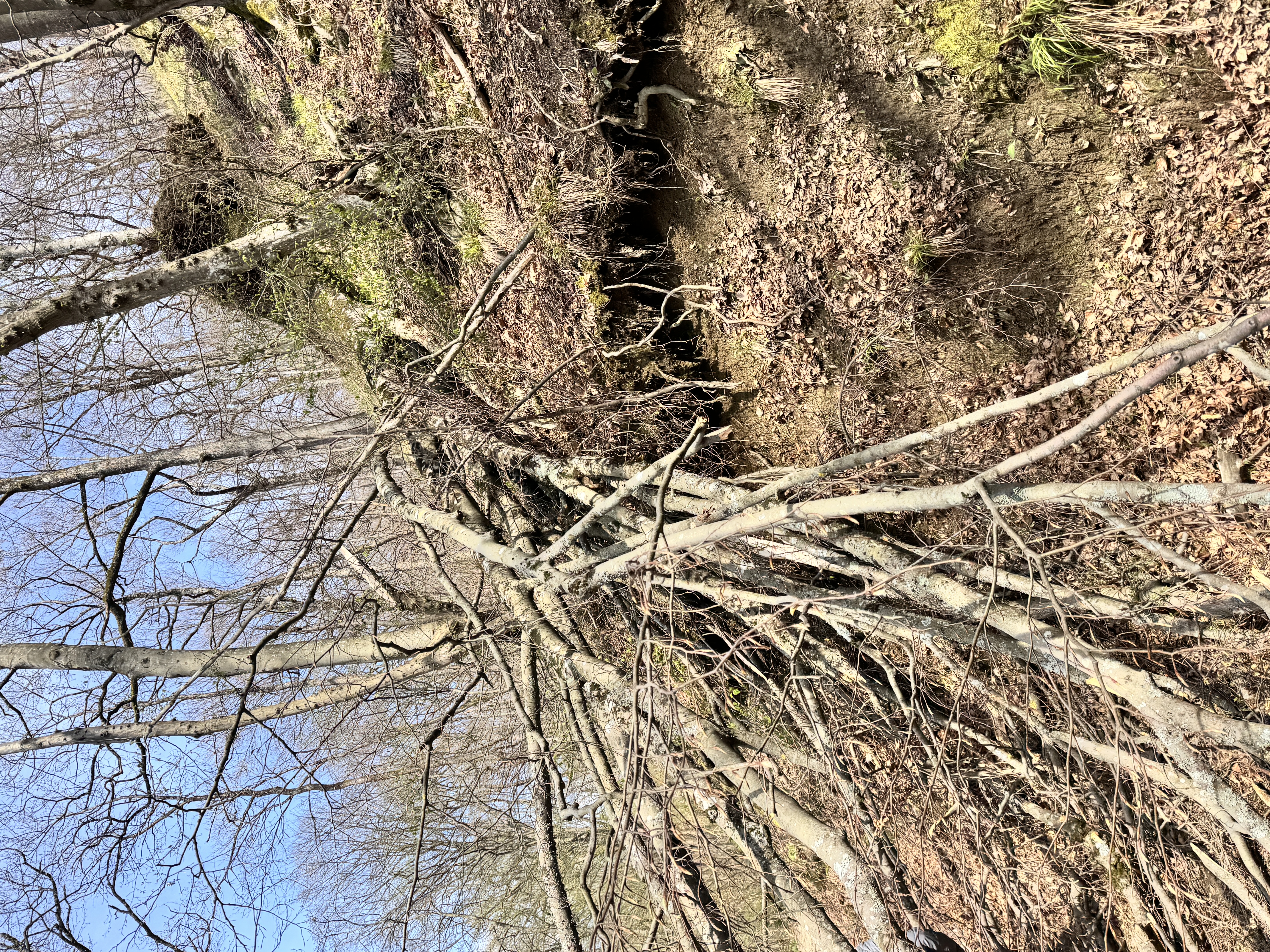
We climbed over the tree and kept walking. Every few hundred meters, another fallen tree barricaded our path. Each one presented unique challenges. Some were relatively simple to cross, others not. Sometimes we climbed over them, other times we crawled underneath. Isaac and I would often choose different methods of crossing the tree, based on which we perceived as easiest. I usually chose incorrectly.
Each tree was the death of a being. Many of them had survived thousands of storms, over decades, only to be killed the day before by a strong gust of wind. At the same time, each fallen tree meant we were further from a way home. The fallen tree separated us from the rest of civilization. Each time we crossed a fallen tree was a reminder that no car would be able to take us home.
“I want to scream into the mountain,” Isaac said suddenly.
We stopped at the side of the road. “AAAAAGHHHHHHHHHHH,” he yelled. The shout echoed for five seconds before fading into the trees.
“That felt nice,” he said.
A few minutes later, I did the same. He was right.
Our descent back to civilization was marked by a few more forest encounters: a pair of baby deer that scurried away, and a shirtless man jogging up the mountain, treating the fallen trees like hurdles. Houses began to appear, then a restaurant, and finally, miraculously, a bus stop. Within five minutes, we were on a warm bus. Within twenty, we were back in our apartment, collapsing into our beds.
As the adrenaline finally faded, leaving only an ache in our feet and a couple pairs of wet sneakers, the reality of the day set in. We hadn’t conquered the mountain; we had simply survived it through a string of chance.
We were incredibly lucky that neither of us had twisted an ankle while climbing up and down those steep inclines. We were lucky our phones somehow held their charge and maintained cell reception the entire time, keeping us tethered to the map. And most of all, we were lucky we ran into those two lost bikers. If they hadn’t specifically guided us on which path to take, we might have marched down the completely wrong side of the mountain, or been stuck on a hill too steep to descend.
We had wandered into the wilderness in thin jackets, holding a couple of sticks, wholly unprepared for the elements. There were many moments when stopping would have been the logical thing to do: at the bus stop on top of the mountain, in the parking lot, along the abandoned road on our descent. Instead we kept telling each other to “just keep walking.” But the bikers had been walking too, and they were lost. Walking alone isn’t a plan, and I’m not sure whether it was wisdom or stubbornness that carried us past that first bus stop. What the phrase did was make the problem smaller. We never solved “get off the mountain.” We solved the next fallen tree, over or under, and then the next one. That was the only decision that ever needed making, and it turned out to be small enough to make.
Later, in bed, I finally ate the last pastry. It was stale.
Enjoy Reading This Article?
Here are some more articles you might like to read next: