Passover in Belgrade
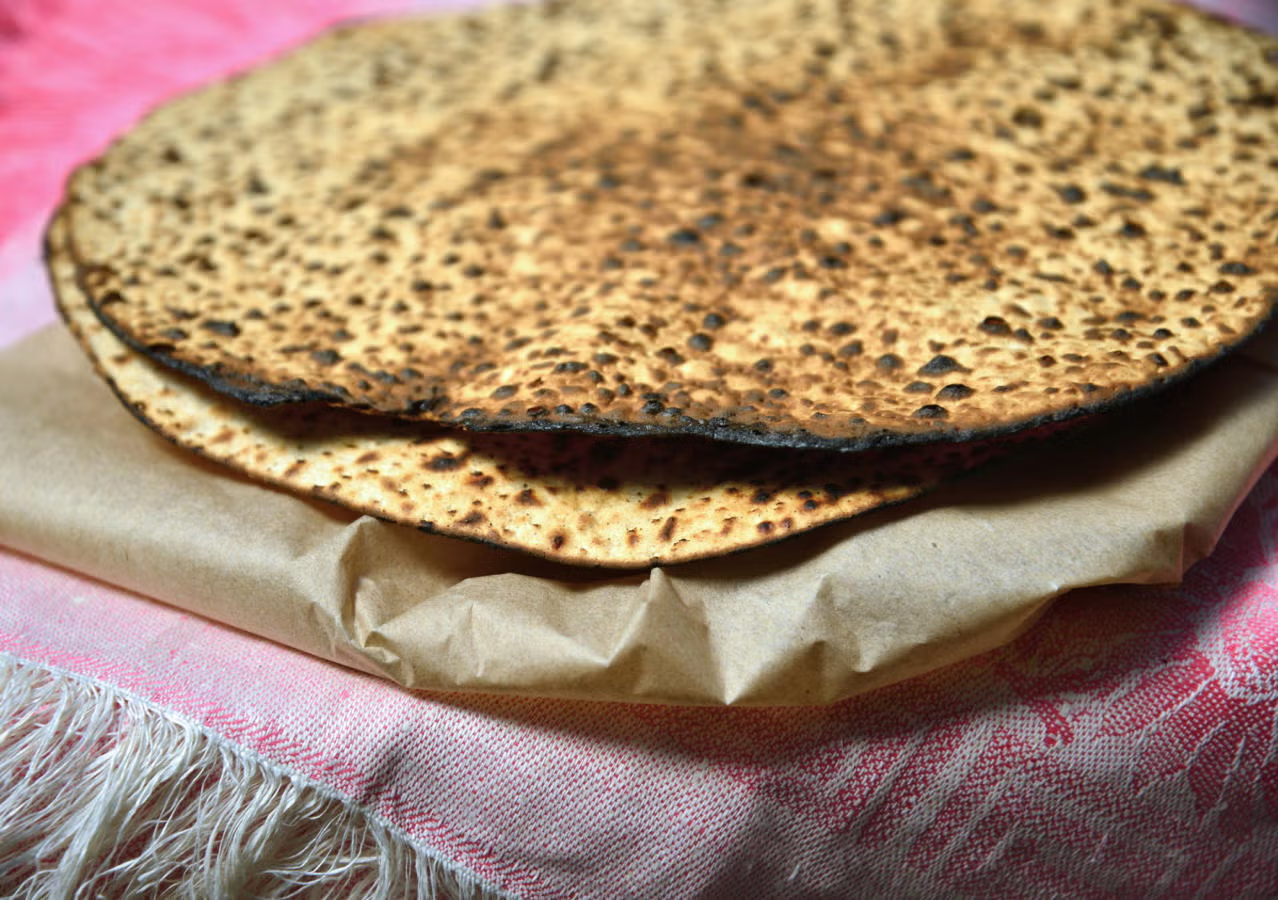
April 1st, 2026 is the first night of Passover, a Jewish holiday that commemorates the liberation of the Israelites from slavery in Egypt. To celebrate the holiday, we avoid eating leavened foods (bread, pasta, etc.) to remember how the Israelites did not have time to wait for their bread to rise before escaping Egypt. Instead, we eat a type of bread called matzah. It is a thin cracker, and not particularly appetizing, but alas it is tradition.
Growing up in Toronto, finding the items needed for celebrating Jewish holidays is no challenge. Many grocery stores have dedicated kosher sections, in addition to whole smaller stores devoted to Jewish foods. In Belgrade, however, it is a different story.
By the 1930s, the Jewish population of Serbia passed 30,000, majority of whom were living in Belgrade. During World War II, over two thirds of the population were murdered. Most of those who survived chose to emigrate to Israel and other countries. In 2026, only a few hundred Jewish people remain in the city.
The grocery stores here do not sell matzah, nor are there dedicated Jewish stores. However, Belgrade does still have a synagogue.
I found their website, saw they had a WhatsApp and sent them a message asking if they happen to have any matzah. Minutes later they responded, saying they did and that I could come by at any time, on any day, to pick it up.
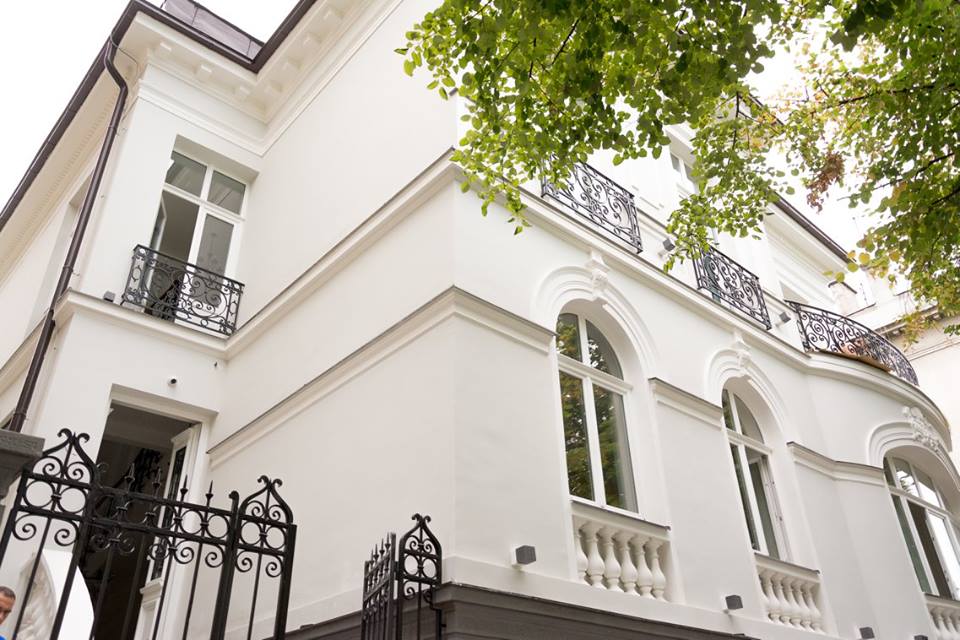
I took the bus to the synagogue, located near the city centre. The building looks like it was once a house, with two floors and beautiful ornate balconies. I rang the doorbell to enter. Inside I was greeted by a teenager who asked me how he could help me. I told him I was hoping to buy some matzah, and he then called on another boy, even younger than him, to grab a box from the basement.
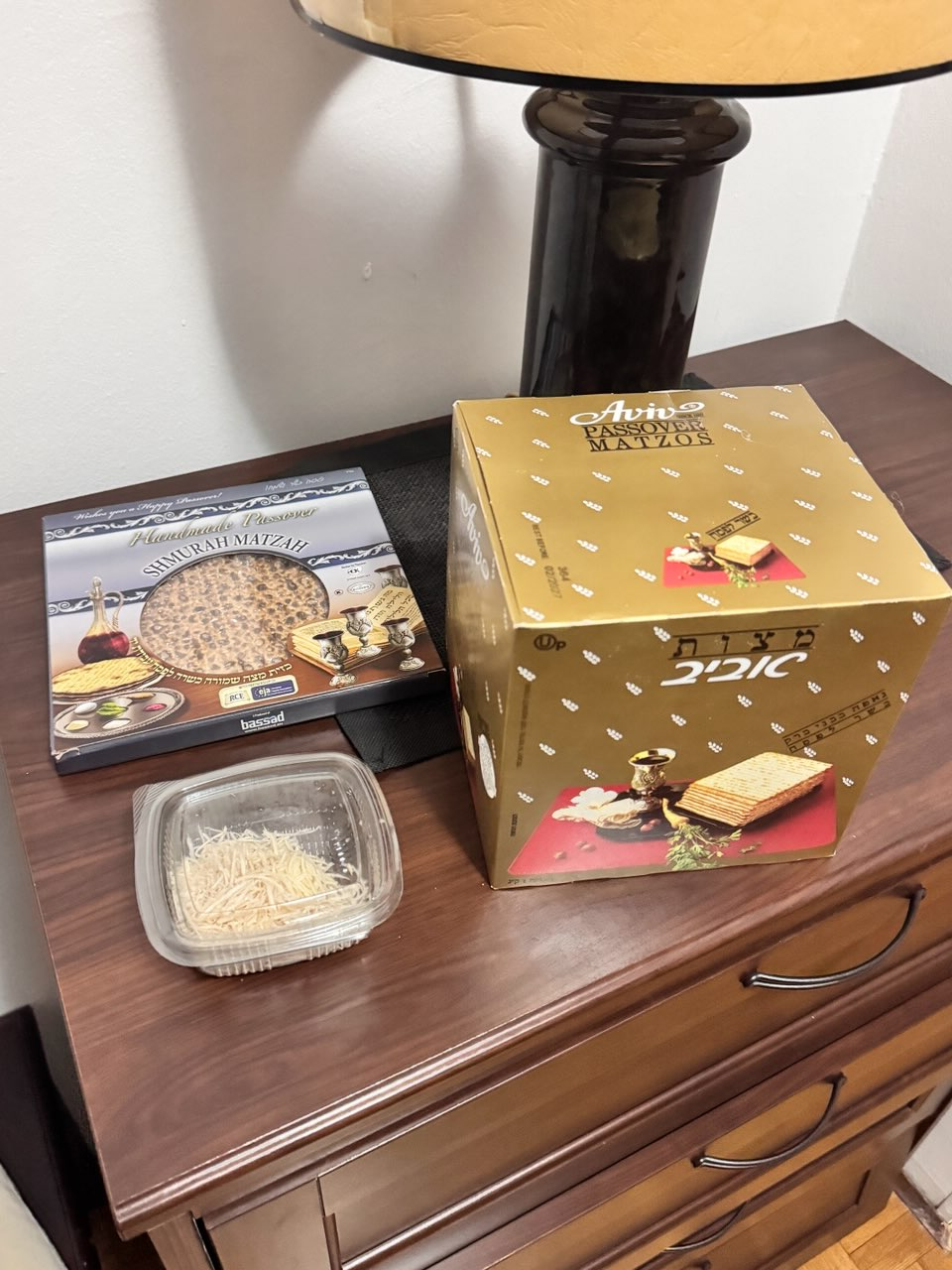
As we were waiting for him to bring the matzah, he asked me where I came from. “Toronto, Canada” I responded. I ended up getting a kg box of matzah plus an additional smaller pack of shmurah matzah (a special handmade matzah used for the Passover dinner).
As I was standing by the door, a middle aged man with a long beard walked by to say hello. He was the rabbi of the congregation. He asked my name and I his, and then he again said “where are you from?” The Jewish community in Belgrade is small and close-knit. It seemed rare to have visitors at the synagogue, let alone ones from so far away.
As I was leaving, I asked the rabbi if he knew a place to buy maror, a bitter herb that is traditionally eaten during the Passover dinner to remember the suffering of the slaves of Egypt. He did not directly respond to my question and soon got a phone call which he attended to. I assumed he had forgotten about it. Less than a minute later, the younger boy came up from the basement with a pack of maror and handed it to me.
This is the first time that I am not at home to celebrate Passover. I briefly considered hosting a seder (traditional dinner on the first two nights of Passover), but, as anyone who has ever hosted a seder knows, planning one alone is a very daunting task. Instead, I will call my family in Toronto, and we will host a dinner together, through FaceTime, 7000 kilometres apart.
A few days ago, a friend asked me what the meaning of Passover is. I explained some aspects of the story- exodus from Egypt, remembering suffering, gratitude to be free, etc. It answered the question, but I was a bit unsatisfied. If this were the true meaning of Passover, I should not feel bad that I am not able to celebrate it at home. I can remember the suffering of the Israelites in Egypt from here and yet it does not feel the same.
I realized that the meaning of passover is celebrating it. In our house growing up, Passover and other holidays would be some of the only times we would have dinner together around the table, and also the only times we would see many of our family friends. The act of sitting around the table together is what lets us be grateful that we have the priviledge to do so.
My seder table this year will look much different. A big box of matzah, and a laptop screen. It won’t be the same, and coordinating a time for all six of us given the time difference is hard on its own, but we will still show up, and eat the same dry, unappetizing crackers.
Maybe next year I will have the time and courage to host my own seder. But until then, I am grateful for the Chabad synagogue of Belgrade, and modern technology, for letting me celebrate from afar.
Enjoy Reading This Article?
Here are some more articles you might like to read next: